


Reinventing Home – Why a New Generation of Americans Choosing Portugal is almost here
Text: Chris Graeme.
According to a recent article published in the Wall Street Journal, Americans are leaving the United States in record numbers, and Portugal has become one of the countries at the very centre of this exodus.
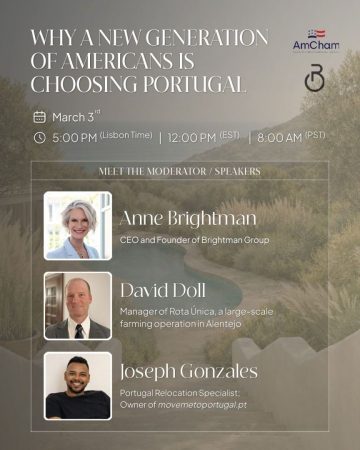
A webinar ‘Reinventing Home – Why a New Generation of Americans is Choosing Portugal’ organised by the American Chamber of Commerce in Portugal was born out of the question that many Americans today are asking themselves in an increasingly volatile and polarised United States: “What does our plan B look like and where would we go if we could do something different?”
The webinar held on Tuesday (March 3) explored Americans’ motives for leaving, why they chose Portugal, what they encountered when they arrived, and the challenges they faced on their relocation journey.
Sheree Mitchell, CEO and founder of Immersa Global, a destination management company that curates unique travel experiences in Portugal for American HNWIs, originally hailed from Florida and has been in Portugal since 2015.
“I think Portugal called me. I didn’t set out to move to Portugal. In fact I stumbled upon Portugal at the end of 2014 and realised there was something really unique happening here. It was a completely different landscape then compared to today”, she recalls.
Sheree says she realised that there was an opportunity for the type of services that her company provides in Portugal, and hedged a bet that Portugal would become a top tourism destination for Americans at some point, and her hunch proved right.
Resilience and determination vital
But what is the mindset that Americans need to successfully navigate, integrate and build a new life in Portugal?
“Even though I’ve been here for 10 years now, I think you’re constantly navigating the bureaucracy and the elements of daily life in Portugal such as living here and running a business”, says the curated travel experience operator.
Sheree says resilience and determination are vital, you have to be solutions-orientated and extremely resourceful as well as having a good sense of humour to help you “get though some of the sticky points and it’s not an easy process”, she adds.
Looking back to a decade or so ago, Anne Brightman, who runs a successful luxury boutique estate agency – Brightman Group – from offices in central Lisbon and the pretty seaside town Estoril, agreed adding; “When I came Americans really weren’t coming here. A lot of services that exist today were not available, and I navigated it all with just my small group of Portuguese friends and their local connections. I would say, overall, that if you’re determined to make it happen, it’s totally possible”.
A slower pace of life
One thing the panelists all agreed on was that you have to be prepared for something completely different, and that many things that are considered efficient in the US are less so in Portugal and that includes the pace of life and the time it takes to get things done.
“You learn a lot about Portugal as you’re navigating the bureaucracy and lot about yourself” said Sheree.

A more accessible market
Steven Whyte, who works with international and local investors to structure and execute value-added real estate projects (Home Miners Property Investment), moved to Portugal around five years ago.
I really had to change the way that I learned how to do things. It wasn’t really about the lifestyle that attracted me to Portugal. It was the maths. I saw a market where yields were stronger than in most Western cities. Acquisition costs were still accessible, and renovation could create significant uplift”, he reflected.
“More international capital was entering the country, infrastructure was improving, and long-term drivers were also strengthening. This, and a combination of affordability, demand growth, and most importantly, the need to build personal relationships”, he stressed.
But the real gain was there is not the same level of competition that is found in other markets which is extremely attractive.
You need patience and a sense of humour
David Doll (Rota Unica) came to Portugal from California in 2018 (He had actually honeymooned in the country years before).
David manages a farm operation investment project in Évora, a town of about 50,000 people about an hour’s drive from Lisbon, managing mostly specialty crops from a portfolio of about 6,000 acres or 2,400 hectares.
“The first lesson I learned is patience. I think everything you do here takes a little bit longer and patience and some laughter goes a long way”, he recalled.
“I’m from the Midwest originally, so if you’re not five minutes early, you’re late. In Portugal time is more of a suggestion rather than it is anything else. So, it really allows the day to flow and be more off schedule than what most Americans are used to. I’ve also learned that people are people”.
“What really sets Portugal apart is the fact that they have different values. They value time. They value time probably more than they do money in many cases. They put their family and their friends first, and you really see the value of that”, David explained.
Anne Brightman agreed. “It’s a shock to realise that life goes at a much slower pace, and you’re not going to change it, it’s going to change you”.
David says that California is a “rushed society, a work culture where people live to work whereas in Portugal people work to live, have dreams, hopes, aspirations and want to do different things”.
“When you go out to dinners, which can be quite lengthy, usually you don’t find yourself talking about work. You’re finding connections and you’re building a social network through interpersonal communications, and I find that adds a lot of value, so it’s been a culture shift”, he adds.

A complex visa process
Joseph Gonzales had been living and working in Singapore before coming to Portugal. “We were looking for a place with good weather and lifestyle, good food and good healthcare. But the main reason was that we wanted our children to have a family lifestyle experience”.
Joseph has a company Move Me to Portugal (movemetoportugal.pt) which helps people from singles, families and retirees to relocate to Portugal.
“There are so many logistical things you have to worry about, and schools was the number one priority for us. Then you’re also navigating rentals and purchases. It was not the easiest of things and you have to have a lot of patience that we don’t normally have in the United States”, he mused.
Then there is the whole visa application process. “There’s nothing easy about the process. It’s a little simpler if you are coming by yourself, but if you’re bringing the whole family, there’s a lot of things to consider to make sure the family is as happy as possible in that transition”.
Don’t stress – drink wine!
“The biggest challenges were navigating the bureaucracy of getting IDs, making appointments and showing up on time. That’s just part of how things are run at the moment”.
Joesph said that patience was the one thing that you have to learn. You have two options. “Go crazy waiting or sit back and enjoy a glass of wine while you’re waiting. We chose wine and that helped”.
When it comes to looking back and thinking about how things could have been approached differently, Steven said he should have realised he needed to approach the market with an open mindset and not a US mindset.
“I really tried to apply systems that I understood from back home where I had a real estate business and so tried to apply the same work ethics here in Portugal.
“I realised that I really needed to sit down, get to know the people that I’m working with because it’s all about building relationships. People like to say: “Oh, money talks.” But in Portugal I think it’s about building relationships”, he said from his experience.
David Doll, on a personal note on buying a property, said he would have “sold everything I brought over, so I would’ve just started with a clean slate, otherwise you end up trying to find a house to fit the stuff you’re bringing, and that’s always going have its own challenges”.
Take time to get the right loans
And on a professional note, David admits he would have “started with a longer runway before we had to jump into a serious business loan”.
“I think it forced us to make decisions we weren’t really ready to make as a company. Processes take up a lot of time, and time is the bank’s best friend when you’re negotiating a loan. You can burn a lot of capital and end up walking into a loan that maybe isn’t at the best terms for you and that’s something that you should be aware of”, he recalled from bitter experience.
But how are Americans treated by the Portuguese? Sheree Mitchell pointed out that in terms of the US, people are “identity forward”. “We want to categorise people immediately on meeting them.”
“We want to know what their ethnicity and nationality is, and we establish our relationships based on the information that we’re able to gather at the outset.
In Portugal, it’s not the case. Maybe now, because there are many international investors and immigrants moving to Portugal, people are curious, but it’s not with the same intention (to put you in a box). As a woman of colour I have never had any negative experiences because of my ethnicity, nor any bad experiences because of my nationality”, affirmed Sheree.
And added reassuringly: “This is the first place in my 40 plus years of existence where I’ve never had to go into detail about what type of American I am. We have that American concept of categorising back home, but I don’t have to deal with that here”.
Weigh up the pros and cons of property refurbishment
Another point raised by the panel was buying a rundown or rustic property and refurbishing it to sell on at a profit.
Steven advised, “If you’re going to fix and flip properties you’re really narrowing your market of who you’re selling to in rural locations. You have to make sure they get priced appropriately, and if you buy a ruin, sometimes it’s easier to tear it down and rebuild anew than refurbish that property because of all of the regulations that you have to go through”, he explained.
Another aspect of dealing with official and business-related matters in Portugal is not asking direct ‘yes’ and ‘no’ questions.
The panel agreed that you need to ask a lot of questions in as many different ways as possible to get helpful answers since people are not necessarily going to afford you the courtesy of second guessing the question that you really wanted to ask.
Part of the reason is that they are looking at the question from a different perspective, some of it is also the language barrier. It’s often best to ask follow up questions to get a clearer picture.
This is all part of what’s known informally by overseas business people working in Portugal as the Portugal Code.
It means the difference between high-context cultures versus low-context cultures. Those from the US, Germany, UK and Canada are from a low-context culture, so there is a tendency to explain.
“We’re very explicit in instructions and our expectations. Whereas if you’re coming from a high-context culture, such as Portugal or Greece, and other countries in Southern Europe, there’s just a collective knowledge”, noted Sheree Mitchell.
At the end of the day, all the panelists agreed that moving to, setting up a business in, and navigating the culture and red tape in Portugal is never just about geography. It takes courage, identity, reinvention, patience, and above all a generous helping of humour.
Things take time in Portugal. It’s not the US where you snap your fingers and it’s done. It’s about fostering relationships, taking those long lunches to discuss things, and not jumping in head first without seeking careful advice and weighing up all the options.
Plan B Portugal can make for a very rewarding lifestyle, but learning the language, understanding that people work to live and don’t live to work, and taking the time to foster relationships are all key to a smoother and successful transition.
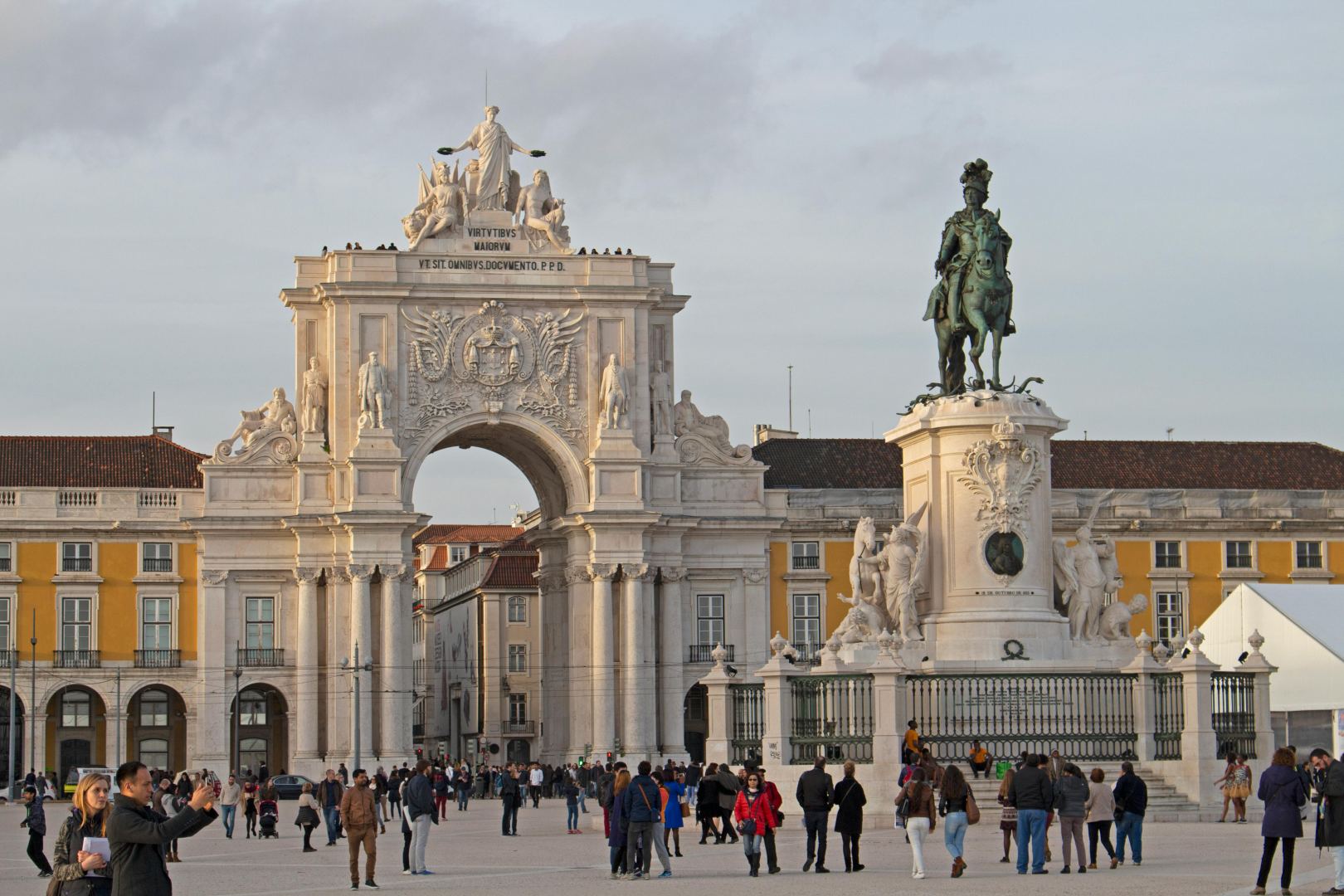
Image: Pexels – giulidesign.