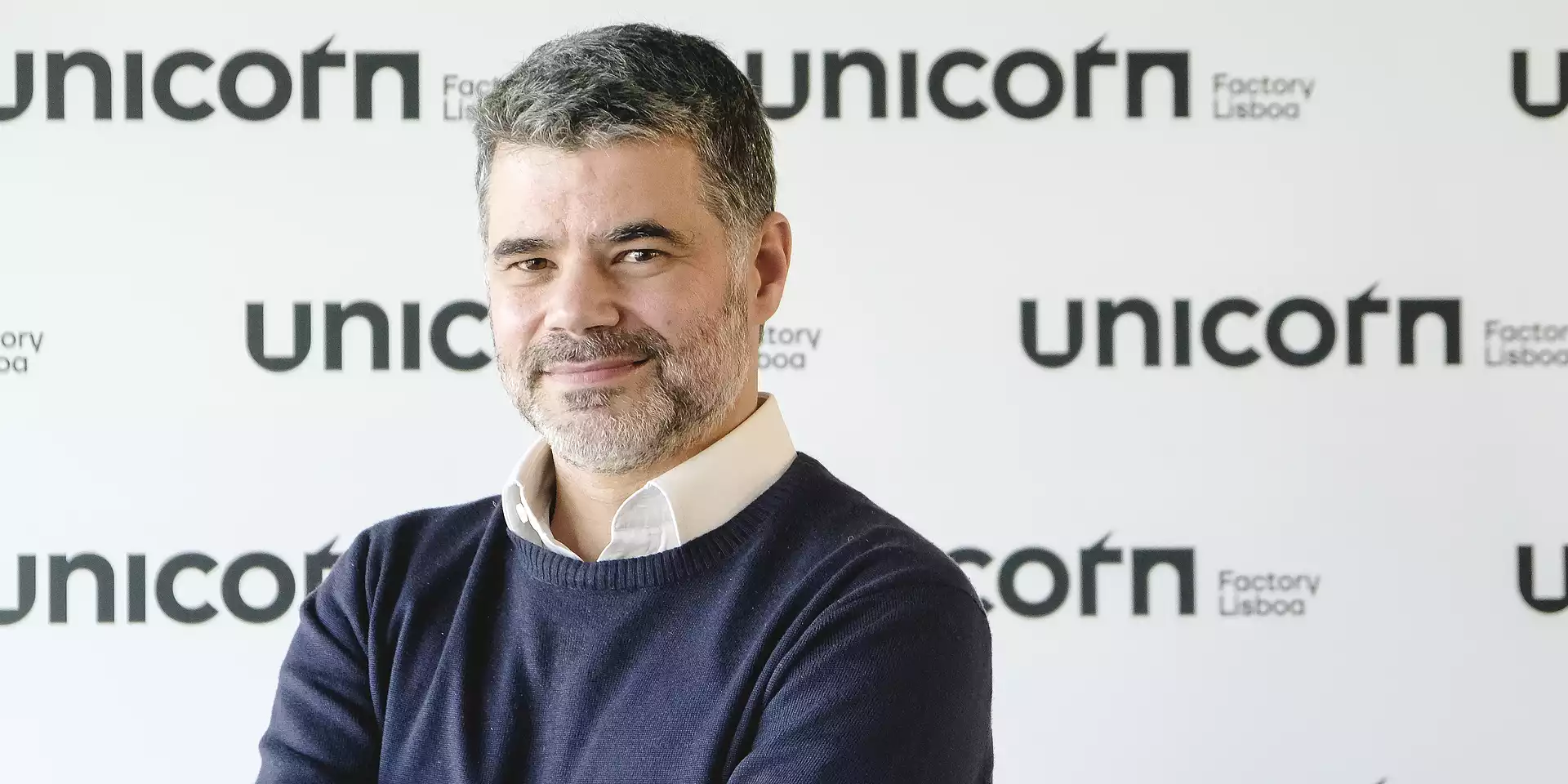



Unicorn Factory Lisboa – scaling to international horizons
Essential Business talks to the CEO of Unicorn Factory Lisboa, Gil Azevedo at Web Summit who explains his vision for Lisbon to become a global technology hub.
Text: Chris Graeme; Photos: Chris Graeme/Supplied
Unicorn Factory Lisboa was launched in 2022 as a key initiative by Lisbon’s Mayor Carlos Moedas to establish the city as a top European innovation hub, focusing on supporting scale-up tech companies to achieve global success.
At last year’s Web Summit in November it teamed up with Startup Portugal with a large stand to promote Portugal’s startup and scale-up ecosystems while providing exposure to around 100 Portuguese startups.
Gil Azevedo was relaxed and down-to-earth when I met him at the Unicorn Factory/Startup Portugal stand despite a packed programme of events and scores of interviews the Unicorn Factory Lisboa CEO had to squeeze into a tight agenda.
“Web Summit is a very important time for us and the entire innovation ecosystem because it puts us in the spotlight of international attention,” he said.
“We ran over 40 talks for side events with our partners and have designed four protocols with entities such as the Rock-in-Rio and Drill music festivals where we’ll run pilots for startups to test their products.
“We’ve also signed a protocol with the Latin America Startup Alliance and with Abu Dhabi’s Global Tech Ecosystem Hub 71, the largest innovation hub in the Emirates, creating bridges between Portugal and Latin America and the Middle East”, Gil Azevedo expanded.
Unicorn Factory has also been holding discussions in Spain with key players with a plan to create an Iberian ecosystem where startups can take advantage of local experts and expertise in both Portugal and Spain.
The foundations were laid in July 2025, Startup Valencia and Unicorn Factory Lisboa signed a cooperation agreement to reinforce the links between both entrepreneurial ecosystems. (pictured)

The goal was to position both cities as strategic technology hubs in Southern Europe to promote internationalisation, talent exchange, and create job opportunities for startups and scale-ups in both countries.
But the crowning achievement for Gil Azevedo and his team at Unicorn Factory was the launch during Web Summit was the launch of a new innovation hub – Healthhub – dedicated to health sector startups partnering with the pharmaceutical firms AstraZeneca, the private healthcare group CUF, the multinational medical gases company Linde, and the European Longevity Hub.
Described by Lisbon’s Mayor Carlos Moedas (seen below at the launch) as the “most important initiative for Lisbon to emerge from Web Summit Lisbon 2025” at the launch party held at co-working space SITIO on the city’s main square Praça Dom Pedro IV, the new hub brings together healthcare startups, investors, universities, and the large pharmaceutical companies to accelerate solutions that can enhance innovation and efficiency in the sector while meeting the needs of patients and stakeholders.
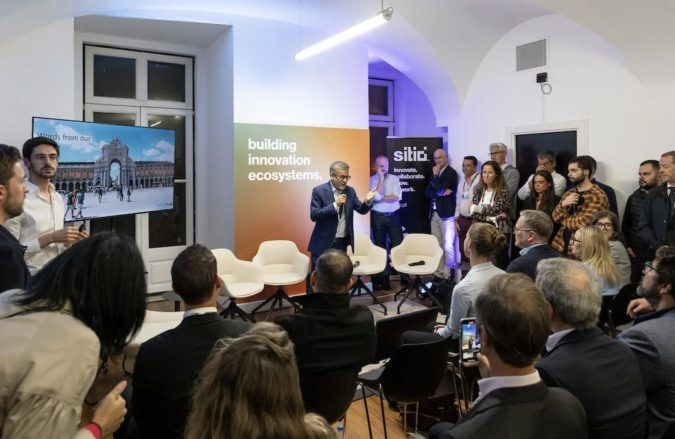
“We had been working on this hub for over a year and this now joins our other hubs we have in the city – the Alvalade Innovation District Hub, the Beato Innovation Hub & Headquarters, the Saldanha District Hub, and Prata Incubation Hub – and are shaping innovation in Lisbon”, says Gil Azevedo.
Beato is a space for open innovation in the heart of the Beato neighbourhood, where work, leisure and cultural areas intertwine to unveil new urban dynamics, a daily living space shared by the Hub residents – entrepreneurs, freelancers, startups, scale-ups and large companies – and the entire surrounding community.
Alvalade’s Aihub is a pioneering concept dedicated to driving innovation and growth within the AI vertical. It aims to cultivate a dynamic community that fosters creativity and technological advancements, empowering the future of artificial intelligence.
Green hub in Entrecampos is a center for green technology solutions and entrepreneurship, reuniting future-savvy stakeholders within verticals such as energy, mobility and construction. As a catalyst for the green, netzero economy, the hub connects the pressing challenges of today with value-adding opportunities for our greentech community.
Saldanha’s Gaminghub. Is the city’s first dedicated space for the growing gaming industry in Portugal. By partnering with key players such as Fortis Games and APVP (Portuguese Game Developer Association), the hub aims to support gaming studios and startups stimulating industry growth.
And The Engineers Hub (below) also at Entrecampos is a collaborative space dedicated to innovation and growth in the engineering sector. By bringing together professionals, startups, and industry leaders, the hub fosters learning, mentorship, and opportunities to showcase impactful work within a global network.

The Prata Incubation Hub in the heart of Lisbon’s downtown Baixa district was the first startup incubator in Lisbon, and opened in 2012 but was eventually absorbed into Startup Portugal.
“With these hubs we are creating communities that are strong, that are relevant and can shape innovation at an international level. We have outstanding partners with us to make our hubs very successful at an international level”, the Unicorn Factory Lisboa CEO added.
Unicorn Factory Lisboa’s portfolio has grown considerably over the past three years to 300 startups. In 2024 alone, 250 startups joined its programmes.
At Web Summit Unicorn Factory Lisboa showcased 63 startups with stands. “I think that the Web Summit is a great opportunity to highlight Portugal and Portuguese innovation on a global stage and many international investors and companies discovered Portugal and its innovative companies and this really helps Portugal to punch well above its weight in terms of innovation”, explained Gill Azevedo.
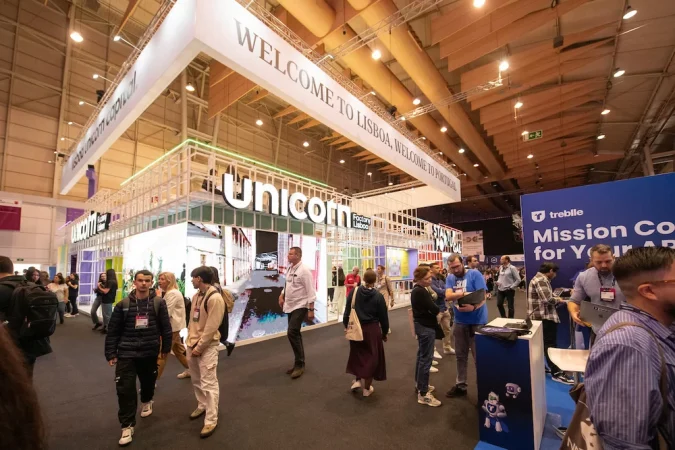
As Unicorn Factory Lisboa grew, its next steps have been about partnering with other countries although surprisingly Portuguese-speaking Brazil isn’t one of them.
“Brazil culturally is always a very appealing market for Portuguese startups, although it’s a difficult market given its size.
So, we’ve been looking a three geographical areas: Europe, because we believe we can help to join other organisations that can help our startups expand to other countries.
“The second is the Middle East because when they announce something they really put the investment behind it and so I really believe its going to be a regional innovation hotspot with startups from India, Pakistan and countries in the Middle East”, Gil Azevedo affirmed.
Gil (pictured below) adds that Portugal is having a big impact thanks to showcasing what Unicorn Factory Lisboa is doing. “Investors and companies are very impressed with how the Portuguese ecosystem has evolved.
But the question remains: how many uniforms has Unicorn Factory Lisboa helped to create? I ask Gil Azevedo if the term Unicorn Factory is rather a misnomer since not a single unicorn has emerged since its creation.
“Our mission is really to help founders to start, scale and go global. We know that the vast majority will not become unicorns, but they can become significant businesses that attract investment, create jobs and retain young talent, and in this sense they are unicorns. Even through they might not make the US$Bn mark, they are significant to the Portuguese economy and for innovation as a whole”.
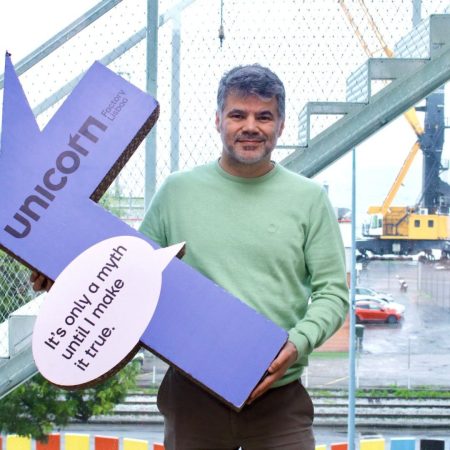
Gil Azevedo says it takes a startup typically eight years to become a unicorn when the economy is going well and investment is abundant and points out that Unicorn Factory has only been in existence for three years and insists that out of all the startups its has helped so far, the failure rate is below 50%. “That’s 60 percent of companies we’ve helped scale successfully”.
One of the reasons that Unicorn Factory is so successful is that, like breeding race horses, it carefully selects and nurtures those startups that are in the best shape, have the best ideas, the best business model and the best team.
But, of course, being good is not enough in the cutthroat world of startups competing to get capital from investors.
Some of that capital can come from business angels, some public money, funds, and, of course, venture capital companies.
Gil says that at the initial funding rounds, the investment in the main comes from Portuguese funds but Portuguese startups have gone on to attract very big tickets with many millions involved such as the unicorns and near unicorns Sword Health, Babel, Tekever (which makes high-tech drones and unmanned aircraft), and Power Dot.

However, he admits that Portugal’s VCs and funds, while not completely capital poor, “doesn’t yet have the muscle to lead this type of big ticket investments.”
That said, Portuguese VC companies like Armilar and Indico Capital Partners have announced funds with over €100 million with the latter launching a €200 million fund, “so, investment from Portuguese investors is growing”.
Tekever is a great example of a home-grown and financed startup that develops advanced technology for defence, security, and space, specialising in AI-driven Unmanned Aerial Systems (UAS) for maritime surveillance (like Frontex), satellite communications, and digital transformation, becoming a major European “unicorn” tech company.
“It was born in Lisbon and as a startup it went through the ups and downs all startups face and showed the resilience it needed to become a unicorn and it took them 20 years to get there but they got there”, said Gil Azevedo.
But if startups need investment, wouldn’t it be a good idea for Unicorn Factory Lisboa to start up its own venture capital outfit?
Gil Azevedo pauses. “That’s a good question. We believe that we need to be facilitating investment and so focusing on that helps our startups to get contacts with the right investors for them.”
It’s no accident that Unicorn Factory Lisboa, already a respected brand on the European tech innovation scene, has joined forces with Startup Portugal which also absorbed Startup Lisboa.
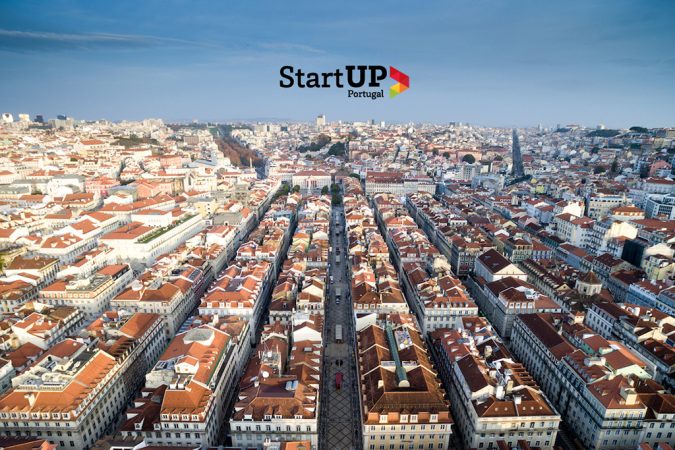
“Startup Portugal is a key partner for us when it comes to promoting our startups overseas. Portugal is a small country and so we need to look at innovation not just in Lisbon but nationwide and this partnership with Startup Portugal really helps overseas and makes Portugal an in novation hub in attracting international startups to Lisbon.”
In terms of branding Unicorn Factory Lisboa is more Business to Clients whereas Startup Portugal is Business to Business explains Gil.
And how does Gil Azevedo describe Portugal’s ecosystem? Is it just a sandbox for startups or is it much more than that?
“I think we’ve progressed from the mainly being a startup incubator to the second stage of helping startups to scale so we are no longer just an early stage ecosystem. Now we are really seeing startups that have global ambition becoming global and looking to expand to other markets and we are helping them in that journey,” concludes Gil Azevedo, the CEO of Unicorn Factory Lisboa.