


Business confederation boss says wage increases were at the cost of company profit margins
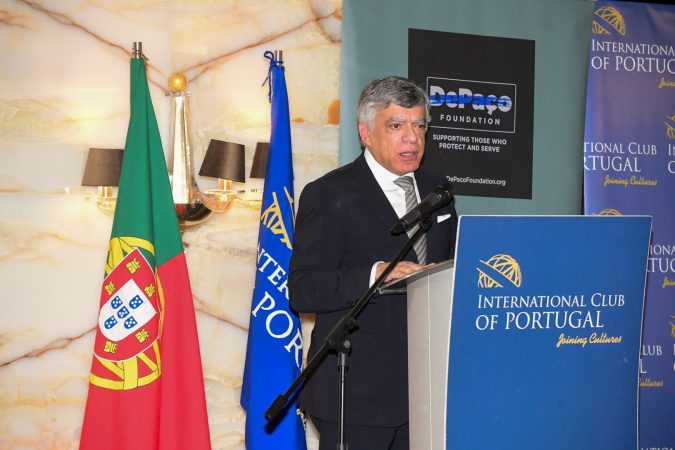
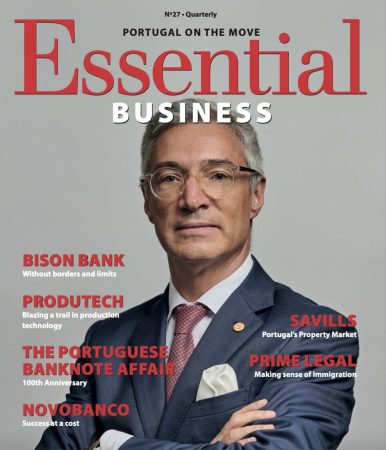
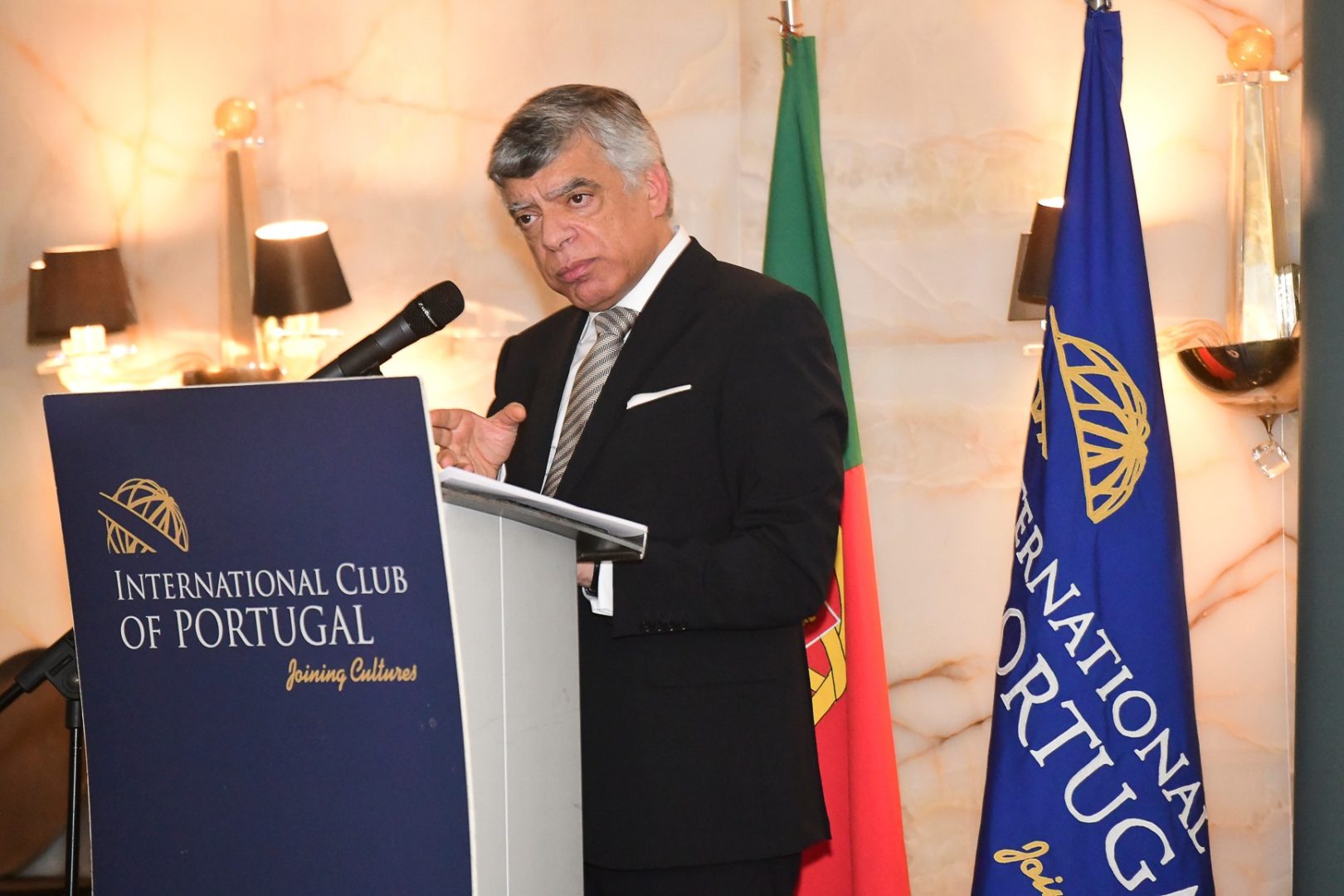
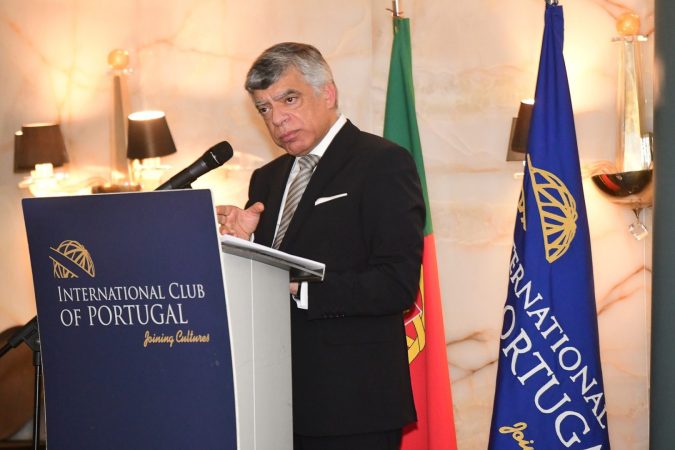
“It seems we have no other aim but to go cap in hand to Brussels” (CIP President, Armindo Monteiro)
Text: Chris Graeme; Photos: Fernando Bento (ICPT)
The President of Portugal’s business confederation CIP, Armindo Monteiro, says that salary increases in Portugal agreed between companies, unions and the government last year has been done at the cost of squeezing company profit margins.
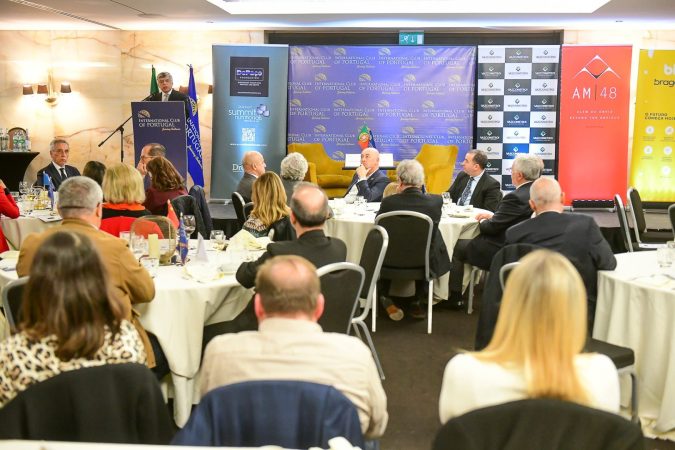
“The real increase in wages in Portugal has been greater than the growth in productivity and GDP, so it has been achieved at the expense of the companies’ margins,” said the companies’ representative, speaking on Tuesday to a room full of business leaders at Lisbon’s Sheraton Hotel & Spa during a lunch-debate organised by the International Club of Portugal (ICPT).
However, the companies’ boss argued that had Portugal’s company bosses, unions and the government not agreed to a ‘Social Pact’, Portugal would have continued to be one of the poorest countries in the European Union (EU) and “we would have never got out of this quagmire and progressed” said Monteiro using a colloquial Portuguese expression (‘cepa torta’) meaning a tree trunk which blocks the way, but from which nothing grows.
In a speech whose central topic was ‘taking responsibility’ which meant cooperating to prosper, “a duty for all of us”, he said society and business had to roll up their sleeves and work together.
“I look around me and it’s difficult to identify an elite. In various areas there is usually an elite – business, social and cultural. People take part in clubs and societies, often remaining silent and doing nothing when action is what is needed,” said the CIP president.
“Today, I want to appeal to the responsibility that each one of you has” he appealed before quoting the French philosopher, the Marquis de Condorcet (1743-1794), who said: “ignorance was the biggest impediment to people’s happiness”.
And he (Condorcet) said a free press would emancipate individuals and promote citizenship, but he also had a sense that the progress in communication could create new forms of domination and that in a democracy people could “freely choose oppression or prefer barbarism to civilization”.
This seemed to be a nod towards the changing geopolitical landscape from cooperation and consensus in a liberal world order to one made up of neocolonial ‘might is right’ through tariffs and force by regional hegemonies, and even an intimation of the rising influence of the far-right populist party Chega’s influence on Portuguese political life following two election results. But that was only hinted at and was not clear.
Negotiations not strikes
Portugal’s solution for a country that would continue to grow, he said, did not mean general strikes and protests but round-table negotiations and not party-political games.
This was an allusion to the recent opposition to the government’s proposed Labour Pact.
Armindo Monteiro also regretted that Portugal had lived off handouts from the European Union over the past 40 years and challenged the elites to “mobilise the people to counter reliance on welfare handouts.
“In these 40 years of membership in Europe, we have received a lot and changed very little,” he said, recalling that the value of the Gross Domestic Product (GDP) per capita, of about €27,200 per person remained below the European average, which is €35,200.
Miserable growth
He said that Portugal had begun its EU membership well in the early years (1986-2000), growing the economy.
“The problem is that from the turn of the millennium to now we got a lot of funds and didn’t do much with them. Billions came in and our growth was miserable”, he lamented.
And the worst of it was that without these funds, the country would have been in an even worse state, but the culture of handouts had become “a purpose and way of life”.
“It is a country that seems to have no other purpose than to go cap in hand to Brussels and that’s not something that I can feel proud of,” said the CIP boss.
And added: “We are not in favour of living off subsidies, we are in favour of funds when they are well applied, but not to strive for structural funds as our only purpose, and this has been our story with one exception – the government that saved us from bankruptcy when the courage was needed”.
Here he must have surely have meant the PS government of António Costa during the pandemic crisis rather than the PSD government of Pedro Passos Coelho which oversaw the ‘troika’ intervention 15 years ago when significant restructuring was imposed by the IMF, EC and ECB in return for a €78Bn bailout. Both governments received bailouts of one kind or the other.
“The rest, he said, were a succession of governments that navigated close to the coast rather than setting sights on a more ambitious open-seas strategy; a country that aimed to get by in the short term rather than have a long-term ambitions.
It was the idea of constantly putting out fires rather than building breaks to stop fires starting in the first place with no idea about how to build a country for the future.
Armindo Monteiro warned that EU funds were running out for Portugal in the next few years, and that Portugal could not keep putting off the essential by kicking a ball of problems into the long grass.
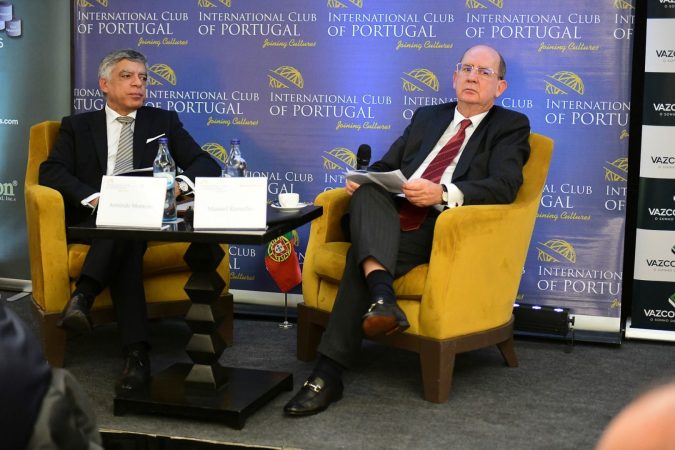
From cap-in-hand to setting goals
“That Portugal’s entry into the EU in 1986 has had a positive impact is undeniable, but between 1999 and 2004 we only grew 1% per year which is absolutely miserable. Now we’re growing a bit more and everyone is cheered with this growth (over 2%) which had come from circumstantial reasons”, he said.
The first was Recovery and Resilience funds from Europe, the second was the increase in tourism, and the third was a shift in investment to safe havens like Portugal far from the war in Ukraine. All happy circumstances for Portugal.
But now this culture of begging, charity and welfare needed to change for other goals.
“It’s time for us to have some dignity and courage to want to be net contributors, and naturally this imbalance between being net recipients and net contributors has to be corrected,” he said.
And he didn’t think that Portugal was fated to be poor because it didn’t have an abundance of natural resources.
“At the time of the Discoveries we had sufficient natural resources yet we did exactly the same, so we haven’t learned the lesson. This is not something we are fated to. Norway knew how to use its natural resources and build its own prosperity and sovereign wealth funds and so does not have the difficulties we have today by far.”
“This is why I think it is vital for Portugal to attract the best for our political life and govern with competence and motivation to serve the best interests of the country, but often we see they (the political parties) are not acting in the best interests of Portugal, but rather just playing party political games which we’re seeing in the current (presidential) elections now,” he added.
Instead, the parties were acting on behalf of their “tribes” rather than the 11 million Portuguese the President of CIP, Armindo Monteiro concluded.
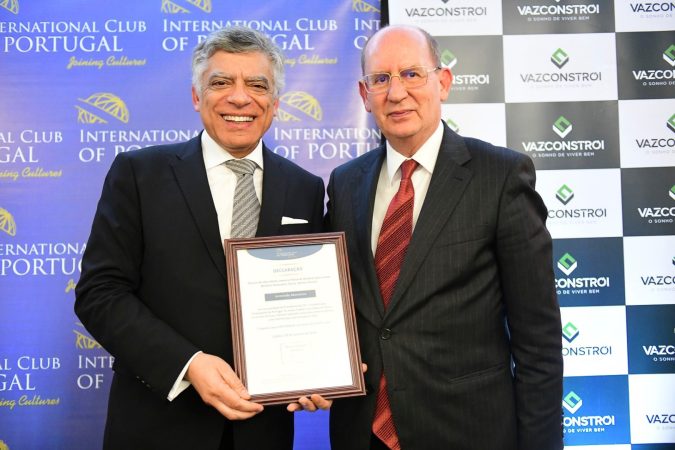
CIP President Armindo Monteiro (Left) with the ICPT President, Manuel Ramalho.