


Beta-i – Leading in the future of AI innovation in Portugal
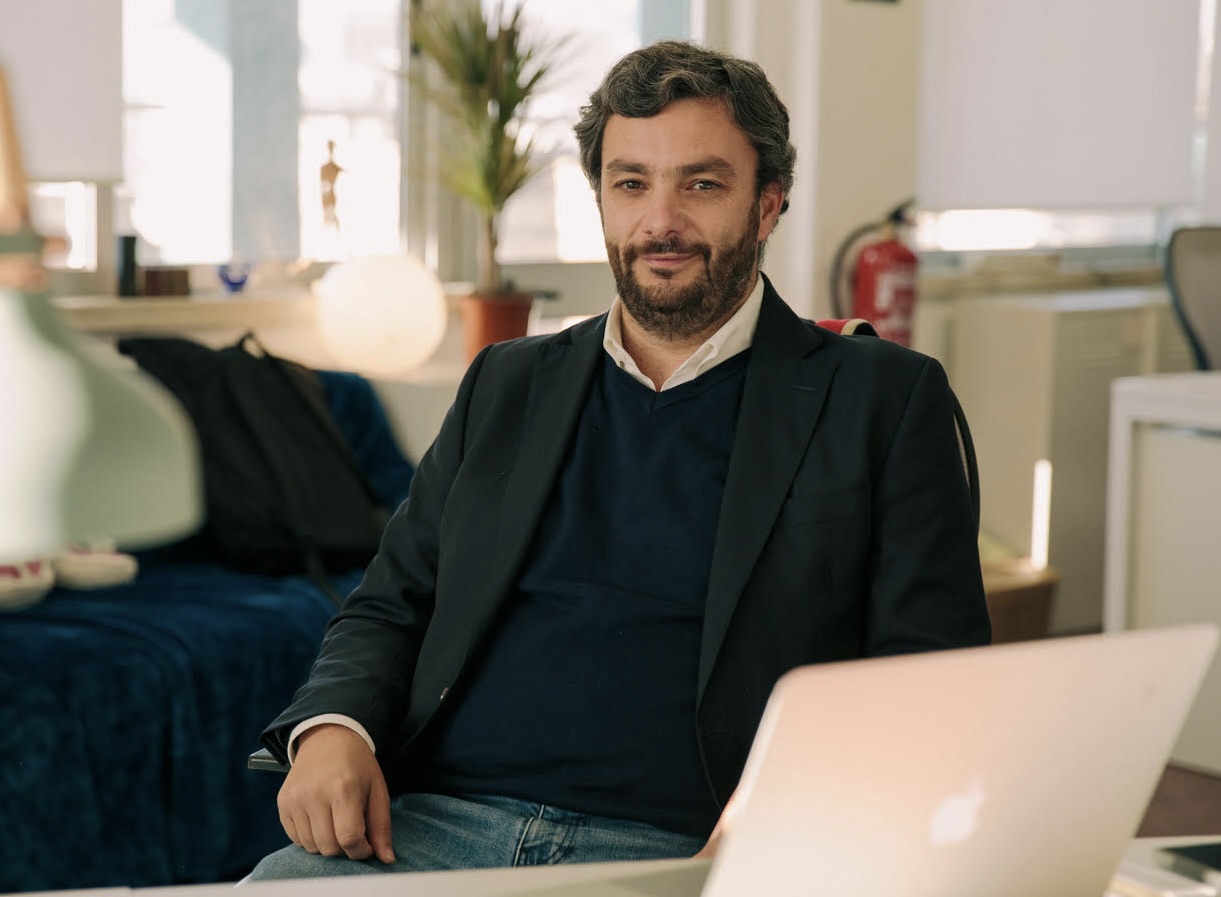
The Portuguese technology innovation consultancy Beta-i is increasingly focusing on artificial intelligence (AI), sustainability, and the blue economy. Essential Business met up with co-founder Diogo Teixeira at Web Summit 2025 to discover more.
Text: Chris Graeme; Photos: Supplied
Since it was founded in 2009, Beta-i, a leading Portuguese-born, global collaborative innovation consultancy that connects large corporations with startups, has played an increasing role in Portugal’s tech success.
The consultancy that helps companies innovate by managing projects, fostering startup ecosystems, and accelerating growth, now has a global presence with offices in Lisbon, Boston, Brussels, and São Paulo.
Diogo Teixeira says that over the past 12 months artificial intelligence has gone from being an idea to a reality whereby most corporations are investing and getting their first results. However, for the majority of them those results are not particularly good.
“I think that Web Summit 2025 was a forum where everybody in the corporate world came together to see what others are doing in AI, what’s working and what isn’t, and the different value propositions or projects are out there and what they can add to the discussion,” said Diogo Teixeira.
The Web Summit, he said, revealed that there are a lot more Chinese experts on AI than US ones, at least at the summit, while the majority of companies have released that they are not seeing value yet from their AI investments.
“The other takeaway is that the Europeans are stuck in the middle of a geopolitical clash between China and the US with this feeling that we are losing the battle to keep up with or lead in AI.
“In the corporate world AI uptake is pretty much an innovation challenge and companies need to build, ideate and see how and where AI can fit into their organisations before building a business case,” the innovation leader explained.
And that’s essentially what Beta-i can help companies do: build a business case, trial a proof of concept, onboard the right professionals, suggest management changes if necessary, and only then suggest that a startup or small company scales up.
A 15-year track record
Beta-i has had over 15 years of experience helping companies to innovate faster and with less risk and that includes the adoption and implementation of AI.
Diogo says that in order to be able to do that, the company needed a lot of tech expertise that it didn’t have before.
“In January, 2025 we welcomed a new partner and investor from Brazil called FCamara, a major Brazilian multinational technology and innovation ecosystem that helps businesses with digital transformation, specialising in e-commerce, digital marketing, AI, data, and agile software development for sectors like retail, finance, and health with a strong presence in Brazil, but which has also expanded into the Europe and US.
“They invested in us so that we can help clients adopt AI faster. It’s more than just about technology adoption and processes or a case of providing a tool to enhance costs; it really changes the entire process when working with AI”, Diogo explained.
Building an innovation and partnership ecosystem in Portugal
In the early days, Beta-i was also a startup incubator based in Lisbon, but the after Covid-19 Beta-i decided not to have a physical space anymore for startups.
“Today, Unicorn Factory Lisbon is definitely the largest startup incubator in Portugal but that’s definitely not something we want to do now, it was done in the past when we were the pioneers building the innovation and interaction partnership ecosystem here in Lisbon. Today there are around 30 different incubators in Portugal.
“Some people say that Portugal is a glorified sandbox for startups but I don’t see that as a problem in innovation because you really do need a platform to test your innovation and products.
“But, I think as a country we should aim for more, and looking back over the past 10 years as an entrepreneur and founder and someone linked to innovation, I think the important thing to recognise is that Portugal was able to attract tech companies, scale-ups, and even some unicorns and big corporations that brought knowledge, innovation and data centres to Portugal” Diogo adds.
Are overseas companies really adding value to Portugal’s economy?
Despite many corporate relocations in recent years, Diogo Teixeira questions if, after all the tax incentives they have received from the Portuguese government, they are really adding value to the Portuguese economy other than in pure employment terms.
“A large number of these foreign companies are taking advantage of Portugal because it’s pretty cheap for them but they are not building tech digital business here and few are working on or with Portuguese companies.”
For Diogo, one of the stumbling blocks regarding Portuguese companies are lower wages, so it’s better for someone from say the Netherlands, to come to Portugal but effectively be working from their home countries and get a higher wage than they would if they were working for a Portuguese organization that does not have the profitability to pay international wages.
“We still need to work to find better ways to incorporate the immense amount of knowledge, expertise and capabilities that people that these foreigners who are living here have, while our own people just leave in search of better wages overseas while those who do come here don’t alway create better value,” he said.
Of course, Diogo accepts these foreigners do bring some value since they bring in money to spend in the national economy and they rent houses, but overall the value is not brought to tech and scale, instead it’s in services, tourism, and the housing market.
The problem of home-grown capital
It’s been often said that Portugal, because of its size, small market, and the relatively small number of large companies, doesn’t have much home-grown capital to invest and make its companies grow.
Diogo Teixeira agrees to a certain point but insists that good projects will attract capital from all over the world.
“If we have good projects, the money will come but I would agree that Portugal doesn’t have much capital to invest long-term in big projects.
“We always need to bring money from abroad, and not just tech startups but also traditional industries. On the other hand we have some Portuguese investors who are trying to stump up the money to buy the Azores airline SATA that’s being privatised.
Another block the Beta-i founder sees to building larger and stronger companies is regulation. “In such a competitive global market you need to be strong and have scale. When I look at Europe I see 27 different markets with 27 different sets of regulations and so it’s hard to scale art this dimension”.
Sustainable innovation projects
When it comes to Beta-i’s success stories with supporting innovative startup projects, Diogo singles out the partnership between Rondo Energy which has developed an industrial decarbonisation process, lowering operation costs while enabling operations to be continuously powered with zero-carbon energy.
Rondo’s partnership with Portugal’s multinational electricity and renewables giant EDP and EDP Renovaveis which will allow industries and other energy-intensive clients in Europe to use renewable energy to generate heat. EDP aims to develop up to 400 MW of wind and solar projects in the medium-term to power up to 2 GWh.
“This was a project run by Beta-i that was presented to EDP and I believe this partnership can only be a win-win situation”, he says.
Together they are involved in the Heineken project and the challenge of building an energy infrastructure that will produce clean energy to power the Lisbon brewery which will be completely run on solar energy, heat batteries and heat pumps.
Another good example of partnerships and cooperation is one Beta-i has forged with leading law firm Vieira de Almeida called the Innovation Club which involves 20 companies whose directors of Innovation met up on a monthly basis for a workshop with invited guests who debate the topics that each guest brings from their organisations.
Beta-i has also supported circular economy and recycling projects, more specifically in the packaging waste sector.
This partnership programme with Sociedade Ponto Verde company fosters collaborations between global startups, innovators, and local industry leaders to address the waste sector and its recycling challenges.
The Re_source programme focuses on enhancing consumer awareness, improving recovery of glass & aluminum, and advancing material digitalization and sustainability.
Often these impactful pilot projects lead to long-term partnerships with ripple effects, setting new standards for the waste management sector, improving recycling outcomes, advancing the circular economy, and establishing Portugal as a leader in sustainable practices.
“If you visit the main garbage separation and recycling centre for Lisbon, Valorsul, you will find the first AI robotic sorting robot that has significantly boosted Valorsul capabilities. This automated digital sorting technology uses computer vision and robotics to automatically detect and separate waste. It increases the recycling of beverage cartons, providing a greater volume of recyclables from the plant.
The importance of Web Summit
I ask Diogo Teixeira about the importance of Web Summit for Beta-i which, incidentally started at the same time as his consultancy was founded.
“Web Summit remains a very important event for identifying startups with strong innovative ideas, which can then integrate Beta-i’s open innovation projects.” More than a technological showcase, the event is, for the company, a space for listening and strategic networking, where partnerships are defined and trends are shared. We want to deepen relationships with companies and entities that work on innovation in our strategic areas,” he adds.
The blue economy
One area in which Beta-i has been working is with startups and projects involving the blue economy, relevant for Portugal which has one of the largest maritime zones in Europe with an established Exclusive Economic Zone (EEZ) of 1.7 million Km2.
To that end it has created BlueTech which is part of the Portugal Blue Digital Hub led by Forum Oceano and drives both acceleration and innovation programmes with the purpose of driving blue economy digital transition.
Now in its second edition, it has 20 projects involving various startups, one of which Bound4Blue has partnered with Grupo ETE to improve fuel efficiency and reduce emissions in maritime vessels.
“It’s a challenging market for innovation. On the one hand there are a lot of opportunities, on the other it’s also, as in the caae with ports, a very traditional one”, says Diogo.
“Ports and shipping are traditional businesses yet we’ve done a project for the European Commission called Aspen involving 28 ports from the Atlantic and Mediterranean – second tier ports that don’t have innovation teams.
“We’ve worked with them to set up innovation teams to look at innovation and then team them up with start-ups to see how these startups can make their business more efficient.
Cooperating with the Recovery and Resilience Programme, Beta-i is exploring three different projects in the blue economy area which are set to start this year.
“The objective is to build a strategy for venture capital in Portugal around the blue economy and we are working with venture capital partners like Indico Capital Partners. (Indico has the Indico Blue Fund with € 50 million (closed) for climate action focused on blue economy / SMB’s.
Prospects for the future
Looking forward, the CEO and co-founder of Beta-i says there will be be challenges but also opportunities.
“We’re at a very interesting and important juncture with a lot of disruptive changes, some of which are excreting but scary at the same time, particularly in the case of AI.
“Artificial intelligence will change the way we work and is already changing the way in which companies earn money.
Diogo Teixeira stresses, however, that the human element in companies should never be forgotten.
“Technology take-up is not magic, neither can you force people to start using AI tools, not least because many of them feel threatened. So there is a lot of work on changing management, transformation and adoption to achieve consistent results”, concludes the co-founder of Beta-i.