


Carlos Moedas – the Lisbon mayor who left no stone unturned
Text: Chris Graeme; Photos: Fernando Bento
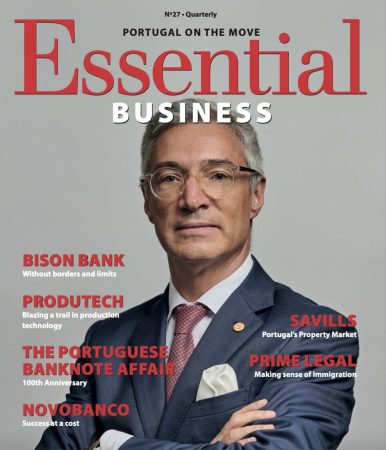
Since becoming Mayor of Lisbon in 2021, Carlos Moedas, a former EU Commissioner for Technology has been anything but idle.
From renovating over a thousand properties for social housing, creating a better health infrastructure for people over 65, an ambitious rainwater drainage system on a monumental Bazalgette scale, to putting Lisbon on the European map for technology startups through Lisbon’s Unicorn Factory, there’s hardly a stone left unturned in terms of sheer social, cultural, artistic, and corporate ambitions.
With city and local municipal elections on the horizon for October 12, Carlos Moedas is standing for a second term, although with Socialist Party (PS) candidate, Alexandra Leitão nipping at his heels for the mayoralty, his candidacy is anything but done and dusted.
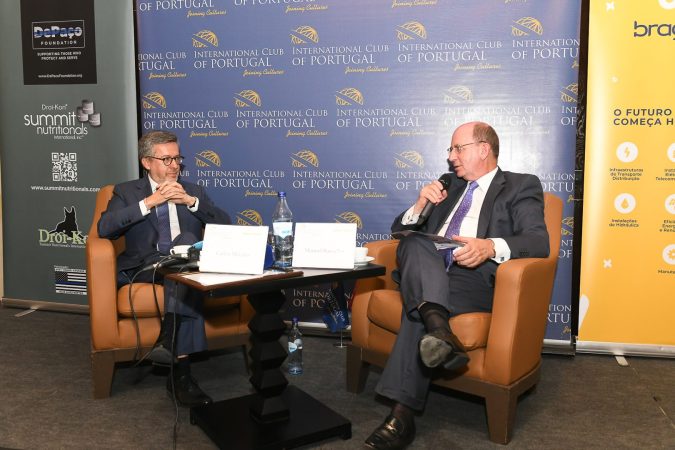
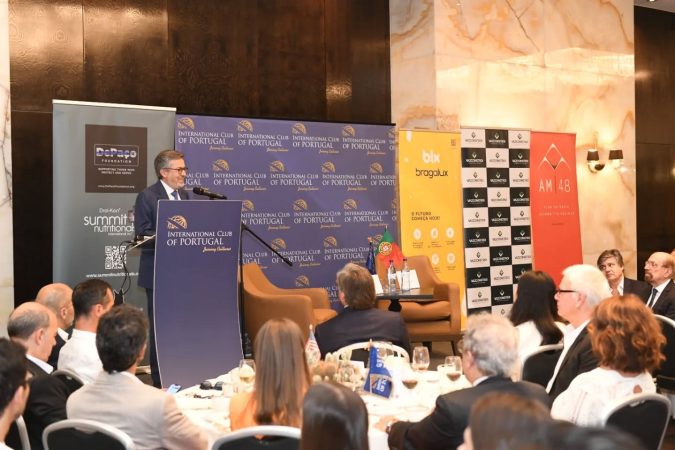
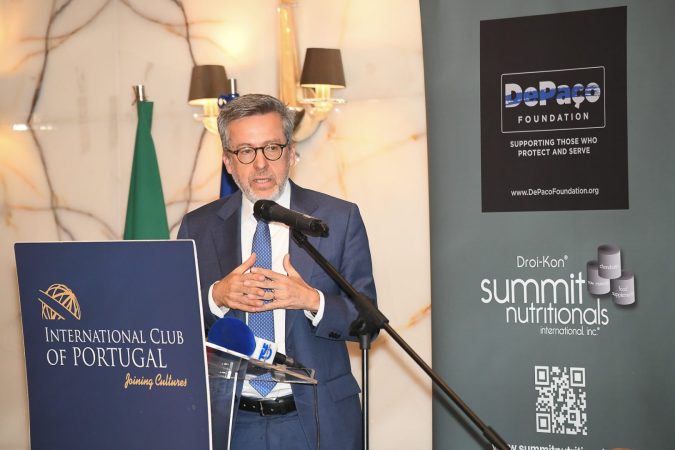
Speaking at the International Club of Portugal (ICPT) on Wednesday, October 2, Lisbon’s Mayor said that he had found his “mission in life” as mayor, and that his whole life had “finally begun to make sense”.
“It’s a real privilege to serve Lisboners and be dedicated 24 hours of the day doing this over the past four years,” he began.
“I started my career as a young engineer involved in water treatment projects and now here I am building this incredible Lisbon drainage project”, he said referring to a solution that will prevent Lisbon being flooded after heavy rains.
His experience is wide: he studied in the US, worked in banking for five years, lived in Paris for 11 years, and then worked in the commercial real estate sector leading the Lisbon office of consultancy Aguirre Newman (now Savills), which is where I first met and interviewed him over 20 years ago.
At that time, I remember thinking – and I have an intuition about these things – that one day, this modest, reasonable and reflective man would become the Prime Minister of Portugal, and I still stand by my prediction. Why? Because he puts his money where his mouth is and gets things done!
Carlos Moedas says that being the mayor of Lisbon is much more than a political role; it’s leadership in its purest form – being in contact with people on a daily basis, and a obligation to be aware of all that’s going on in the city.
And many ordinary Lisboners will remember his famous walkabouts in different Lisbon neighbourhoods, chatting to the locals and what they thought needed to be improved for the city and their local neighborhoods.
And the surprised commuters on Lisbon’s trams and buses who found their mayor chatting to them informally, without a retinue of advisors, getting grass roots ideas from the locals that make up this city – unlike the many politicians who glide silently from place to place, engagement to engagement, in tinted windowed dark limousines.
And the mayor said that everything he had done ha been inspired by his vision for Lisbon which was both personal and very specific.
“I remember when I came here in 2021, I wanted a ‘Local Social State’ because the main concern of any mayor is people.
“I’ve been an immigrant and lived in many cities, and if a city is suffering social unrest and does not have a local Social State that doesn’t help people, then the city might have all the rest, but does not have what’s essential, which is harmony between people,” he continued.
Lisbon’s affordable housing crisis
For Carlos Moedas the biggest challenge was and continues to be housing.
“I knew that I could not solve the situation by simply building houses, and 3,000 families were on the waiting list for social housing, and we looked at housing that was empty and easy to do up,” he explained.
And so the Lisbon City Council refurbished 1,900 properties that had been shut up and handed over keys to over 2,880 families.
Then it embarked on a policy of subsidised rents, since today even a professional person living in Lisbon can’t always afford the high price of rents. (Around €16 per square metre in Lisbon on average in 2024)
“People can’t pay more than a third of their income on rent, so that when people come to the council with a rental contract that is more than a third of their salary, we pay the difference”. (Not quite sure what the ceiling was on this – I can imagine some smart Charlies moving into Lapa!)
Improving health for the elderly
The second pillar of this Social State in Lisbon was health. When Carlos Moedas arrived there were many people who didn’t have a family doctor, so it launched a health plan in which people over 65 could sign up to.
“Some of these people suffered from isolation and loneliness, going went days without speaking to anyone. People are isolated in cities today and that’s terrible”, the mayor reflected.
“This plan, in addition to to helping with doctors appointments helped people in situations where they were living in isolation,” he explained.
This was not about replacing the National Health Service, which was the anchor for healthcare in Portugal, but the Council even included breast cancer screening for the over 50s.
“We spoke with the Champalimaud Foundation which provided a low radiation scanner, and we started screening women who were under 50 and that’s one way we built this ‘Local Social State’”.
The Council also cleared away tents and rehoused the homeless who had been living in tents around the Anjos Church area of the city (Avenida Almirante Reis) and removed over 500 tents from other parts of the city.
And Carlos Moedas said that social welfare was a concern for everyone, including businesses and what they can do for the city.
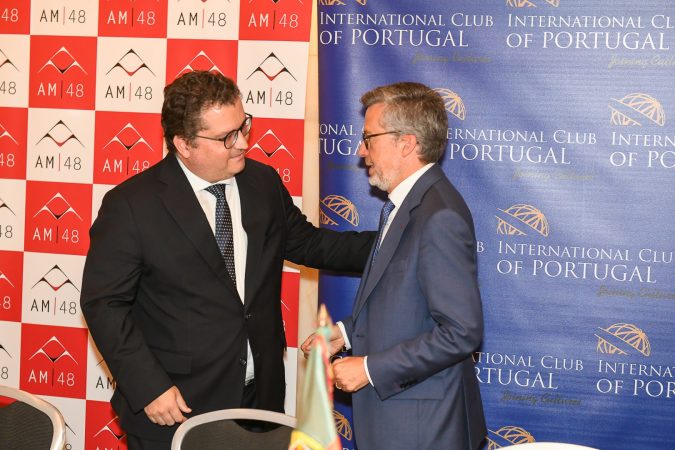
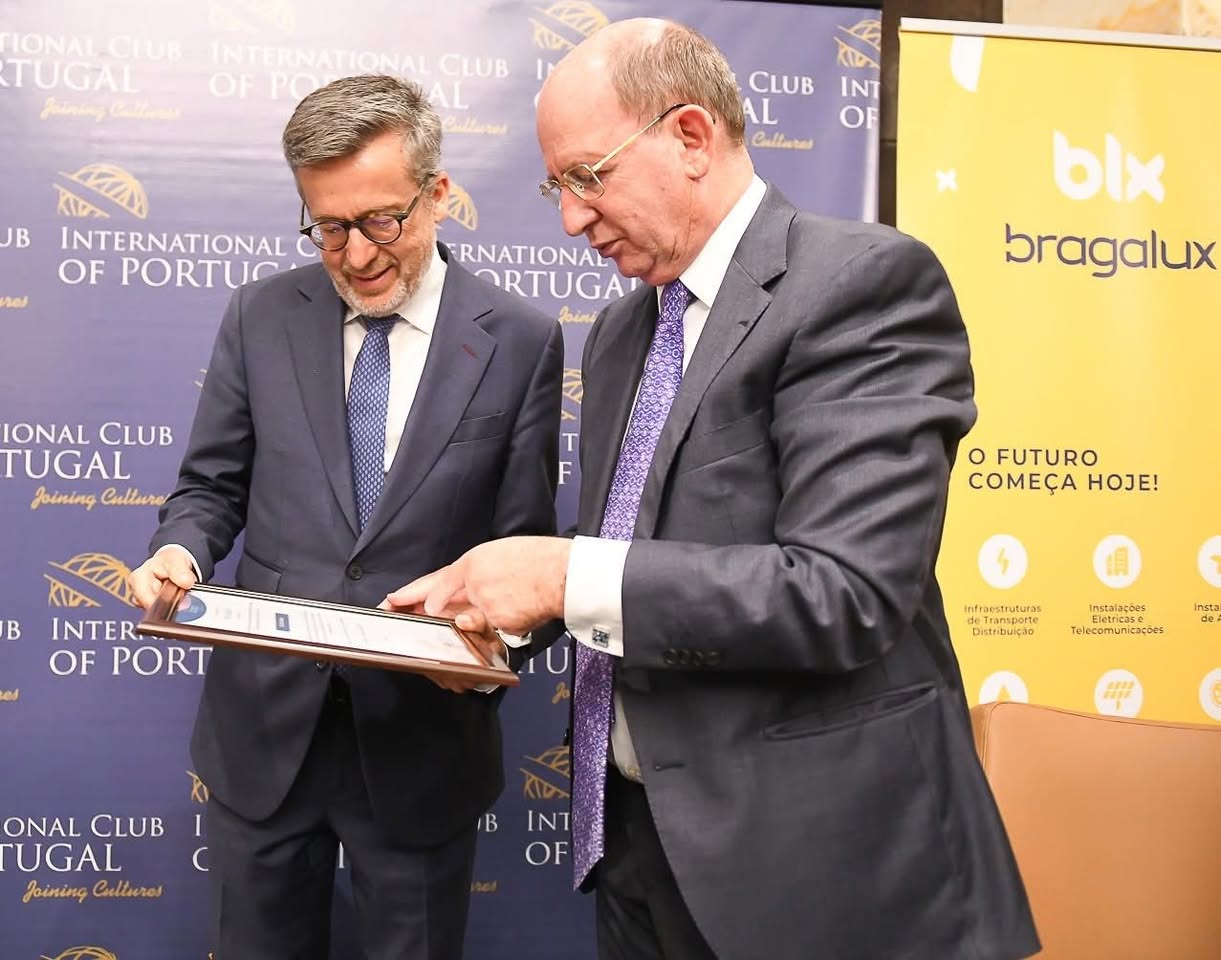
Photo: With Portugal’s Finances minister, Joaquim Miranda Sarmento
Lisbon Unicorn Factory – a centre for technology entrepreneurs
And then on to the mayor’s cornerstone project for his first term – the creation of the Unicorn Factory Lisboa, which admittedly to date hasn’t created a single unicorn (a company with revenues over €1Bn) but has helped over 200 companies grow and scale-up, and has brought employment of over 15,000 people to the capital.
“This was obvious to me after being the EU Commissioner for Innovation for five years, but many people scoffed at the idea at the time”, he reflected.
“And why shouldn’t our young people dream of building a unicorn or large company?” the mayor insisted. “Why should we be less than others? We’re not.”
Companies create jobs
And in fact, the mayor pointed out that Lisbon today had around 16 companies with a turnover of over €1Bn, and that they had brought more than 80 technology centres, including Deloitte which is building a €25 million centre in Carvalhal that will employ over 2,500 young people while AstraZeneca has invested over €600 million in Portugal.
Luxury group Richemonte, too, has created 16,000 jobs in Portugal at its technology hub in Lisbon, and elsewhere.
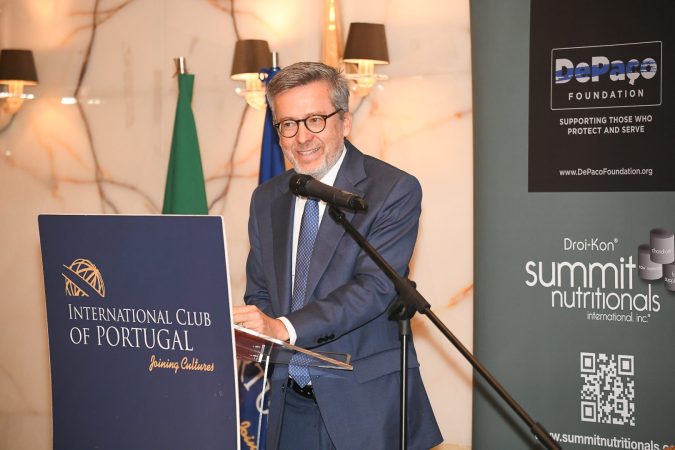
“In the same way that politicians should have a deep social concern, they should not be afraid to talk about companies because it’s companies that create jobs”, he said.
Carlos Moedas also pointed to what the council had done in terms of culture by creating a new destination for contemporary art.
And here he referred to MACAM which opened this year in Lisbon – the Armando Martins Museum of Contemporary Art (MACAM), inaugurated on March 21 in the building of the former Condes da Ribeira Grande Palace.
MACAM exhibits the Armando Martins private collection of more than 600 works, from the late 19th century to the present day, and the opening was covered by the Financial Times.
Not to mention the Almada Negreiros murals at the Marais Almada Gares Maritimas Contemporary Arts Centre – a site devoted to the mural panels that artist Almada Negreiros painted for the two maritime stations designed by architect Porfírio Pardal Monteiro in the 1940s. The stations are about 800 metres apart with a shuttle bus taking visitors from one to the other.
Added to this is the Julião Sarmento Pavillion and the new Modern Art Museum – a new museum in the city of Lisbon, with a compact, intimate scale and a distinctive, internationally-oriented programmatic approach.
The building is the result of the renovation and conversion of a former food warehouse into a contemporary art center, designed by architect João Luís Carrilho da Graça, with visual identity by Pedro Falcão.
It houses the collection of artist Julião Sarmento (Lisbon, 1948–2021), which serves as the foundation for a multidisciplinary programme where visual arts intersect with cinema, performance, and other forms—guided by Sarmento’s own words: “A work of art must always ask questions rather than make assertions”, as he used to say.
And finally after a major facelift and refurb, Lisbon’s design and fashion museum MUDE reopened in 2024 and this year has an amazing exhibition with 50 original pieces deigned by the British fashion icon Vivienne Westwood.
So, whether Carlos Moedas wins or loses the municipal elections next month, nobody can hold a candle to him and say he’s done nothing for Lisbon over the past five years. He’s done a heck of a lot!