


Portugal’s stock market slow to recover from ‘Troika’ bailout compared to Ireland, Cyprus and Greece
Portugal’s stock market Euronext Lisbon has risen to 8,000 points which has not happened since April 2011 after which Portugal applied for emergency funding of €78Bn from the ‘troika’ of international lenders that year.
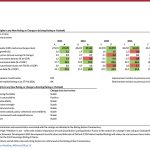
It is a benchmark that is strengthening the position of Portugal’s capital markets which last month returned to the pre-troika levels of 14 years ago. Nevertheless, overall the Euronext Lisbon PSI Index of its leading 15 listed companies has only gained 3.5% since then, a far cry from Greece, Ireland and Spain, and lagging behind the once ‘bad boy’ of Southern Europe, Greece.
From the group of countries that needed bailouts (in Portugal’s case the ‘troika) such as Greece, Cyprus and Ireland, or their banks recapitalised (Spain and Portugal), the Portuguese stock market took the longest to get back to pre-‘troika’ levels and did so at relatively modest gains.
Looking back to the run-up to 2011, the crises began with the sub-prime crisis in the United States and the collapse of Lehman Brothers which contaminated the financial sector in Europe, resulting in the Southern Europe countries being cut off from reasonable lending rates from bond investors, precipitating the sovereign debt crisis.
On April 6, 2011, the same day that the Portuguese treasury had to pay unsustainable interest rates of 5.11% to issue €610 million of sovereign debt in the form of six-month bonds, while 10-year bonds required hefty interest rates of 7%. Portugal’s Finances minister at the time, Fernando Teixeira dos Santos, eventually advised the then Prime Minister José Sócrates to ask for external help after the Portuguese government realised it would no longer be able to keep within the EU’s Stability and Growth Pact of borrowing no more than 3% of GDP.
Of the countries that had sought bailouts from the IMF/ECB/EC international lenders, Ireland’s IBEX recovered the fastest. After having borrowed €85Bn announced in 2015, Ireland had paid off the debt and balanced its books.
Its stock market eventually bounced back to the current 11,600 points (+3.5%) compared to pre-bailout levels.
Spain’s economy significantly recovered and outperformed many of its peers since the 2012 bailout, with the country forecast to be the world’s fastest-growing major economy in 2024.
Spain’s stock market Bolsas y Mercados Españoles (BME and its IBEX Index, which lists the country’s 35 most important and listed companies, stood at 6624 at the time of its banking sector bailout in 2012, rising to 15,303 today. (+122%)
This recovery was evidenced by booming tourism, significant progress in closing its post-pandemic GDP per capita gap with the Eurozone, and successfully issuing debt at historically low rates, although challenges like high youth unemployment and unaffordable housing persist to this day.
But go back to 2012, the IMF estimated that Spain’s banks needed between €40Bn and €100Bn in recapitalisation to stop the risk of them going under. The then Spanish Minister of the Economy, Luís de Guindos asked the IMF for help.
Cyprus Stock Exchange (CSE) has gained +84% since it asked for a bailout despite being more recently pummeled by the war in Ukraine and the Middle East.
It is worth remembering that Cyprus had to borrow 10% of its entire GDP to save its second largest bank which had been heavily exposed to the fallout from the Greek economic crisis.
As for Greece, which between April 2011 and May 2024 traded below 15,000 points, recently returned to a benchmark of 20,000.
It will be recalled that by 2009 Greece had had an annual deficit of 12.7% and a public debt running at 130% of GDP – double the previous year.
In fact, Athens Stock Exchange (ATHEX) has achieved some of the greatest gains on its stock market in the world over this year thanks to improvements in its economic outlook, and upgrades from the major ratings agencies, as well as the growing attractiveness of its shares to international investors. Nevertheless, its company shares have grown only +12% since the bailout request.
But of all these stock markets, Portugal’s has taken the longest to recover and has made the lest gains making just +3.5% since the bailout in 2011. This year alone it made 25% in overall gains with analysts stressing that the miscorrelation with the largest global stock market indices have helped Euronext Lisbon.
The boost in recent months was partly down to a positive performance at the European banks, (particular BCP in Portugal), as well as the European energy impetus, including from EDP and EDP Renováveis.
Around15 years ago all of these countries (Spain, Portugal, Ireland, Greece and Cyprus) needed bailouts either to its governments to support their economies and pay civil servants, or to prevent their banking sectors from collapsing. All had been over-leveraged, and all were under pressure from the international sovereign bond investment markets demanding increasingly unsustainable rates of interest for the money that they lent these countries to keep their governments afloat.
But unlike the others, the overall percentage gains of the shares of listed Portuguese companies on the Euronext Lisbon stock market were the most modest over that period at just +3.5% since the bailout in 2011.
Source: Jornal de Negócios