


Is engineering sustainable proteins the answer to unsustainable livestock farming?
Text: Chris Graeme; Photos: Chris Graeme/Marie Bacelar
While burning fossil fuels is undoubtedly a large part of the problem of global warming, resulting in the kind of storms and heavy rain that Portugal suffered throughout January, there is another elephant in the room that rarely gets mentioned – large-scale cattle production.
It has, for over two-decades, become patently obvious to scientists that we need to find more sustainable sources of protein and one startup investor thinks they have found part of the answer.
Paulo Gaspar is an investor in Mission Barns, a cultivated meat company creating products that combine plant protein with cultivated pork. Mission Barns products contain real meat, without harming a single animal. A small sample from a pig is grown in a cultivator that mimics the animal’s body.
He is also the co-founder & CEO of BRAINR, a company building AI-enabled software to help modernise food factories through AI-enabled software — upgrading how food is produced at scale.
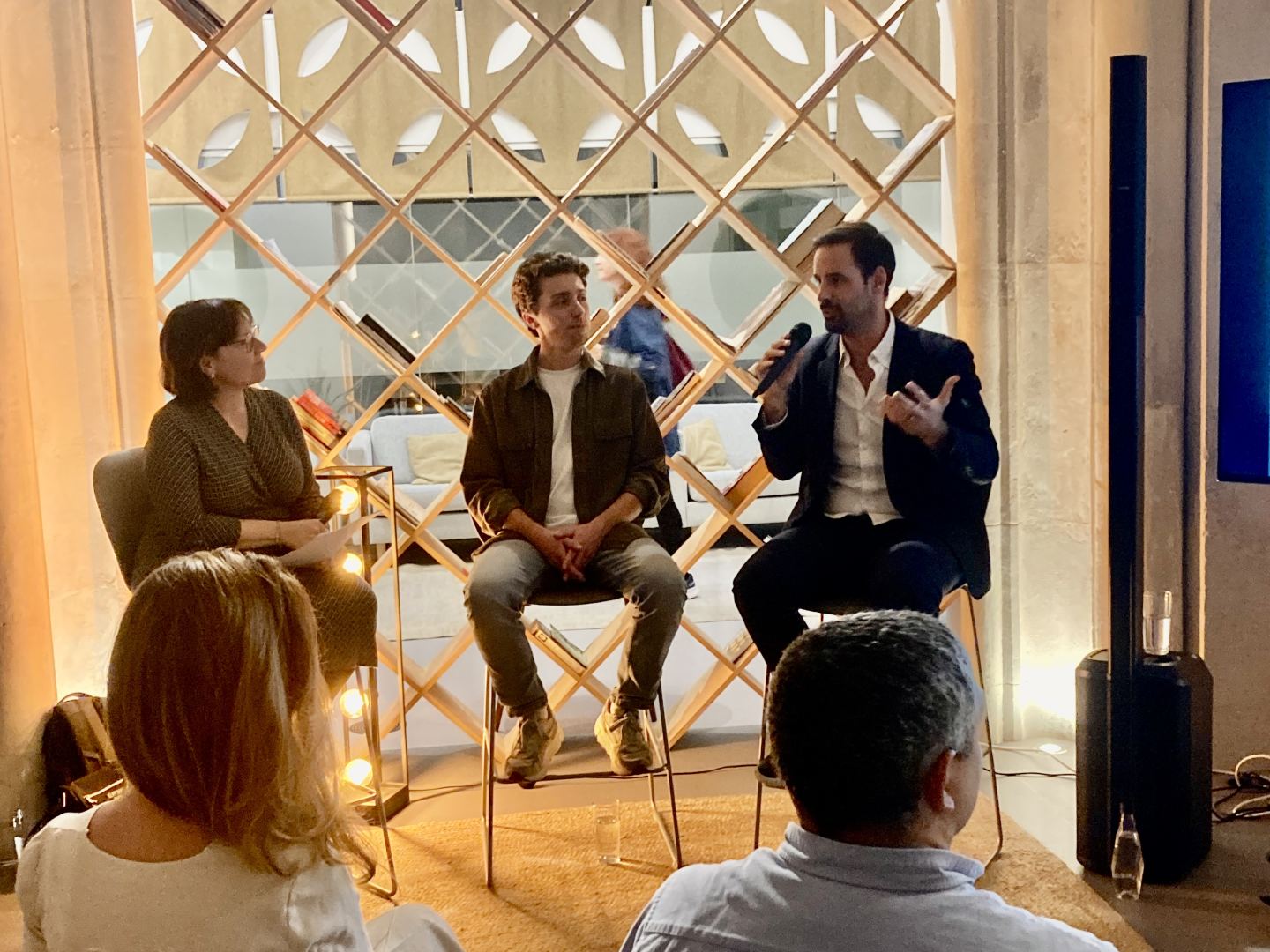
Paulo was the guest speaker of the California-Lisbon cross-border community RedBridge on Thursday, February 26 to discuss ‘Foodtech: the Future of Food’.
The entrepreneur was also joined in the discussion by Tijn van Vugt of MicroHarvest, a Hamburg-based biotech company developing scaleable single-cell protein to address rising protein demand which is expected to increase by a massive 50% by 2050.

MicroHarvest recently launched a pilot plant in Lisbon, accelerating commercialisation and anchoring next-generation protein innovation in Portugal.
But why is all this important? First, Africa, the continent with the fastest-growing population in the world has, despite its vast size and varied terrain making it capable of growing virtually any kind of arable crops and rearing livestock, imports significant amounts of food because of low agricultural yields, rapid population growth, and inadequate distribution and infrastructure networks that cause high post-harvest losses.
But it’s not just that: large-scale cattle production in the United States and Latin America is severely impacting the environment through significant greenhouse gas emissions (methane), widespread deforestation for grazing, and water pollution from manure runoff. It drives biodiversity loss, soil degradation, and high water consumption, accounting for a massive share of agricultural environmental damage.
And then in the developed world there’s the problem of frightening increases in bowel and colon cancers, particularly among the young. Meat consumption, particularly red and processed meat, is linked to higher cancer risks—especially colorectal, breast, and prostate—due to the formation of carcinogenic compounds during cooking or digestion.

Brainr – the brain of food production
But back to Paulo. He is the co-founder and CEO of Brainr, founded in 2023 with a mission to become the brain of food production factories – in other words how to give factories the same intelligence and agility that a lot of technology companies have.
As an investor he is also chairman of Casper Ventures which focuses on seed-stage investments, an investor in Mission Farms which is a California startup that has developed cultivated pork fat for food products.
“I was searching for a solution to help me see what’s happening in factories in real time and went onto the market all over Europe, the US, and Brazil to find the best solutions to implement in my own factories, but all the solutions were outdated and I didn’t want to buy a plant that had been built in the 1980s or 1990s.”
Paulo noticed that many of the production lines were still be run by Windows 95 software which in the 2020s just didn’t make sense.
These companies didn’t want to change, so he decided to found Brainr in 2019 and within one year his small team it to work in a large factory, bringing digitisation to the food production industry.
So what they created was an intuitive next-generation cloud Manufacturing Execution System (MES) software that enables smarter processes and integrated systems that help production, warehouse and quality teams manage yield, and make informed labour decisions throughout the production cycle.
Brainr is designed to give full control to the beef producer, from the live animal through carcass control, to the various packaged cuts all through real-time data.
“We’re bringing this digital brain to be connected to everything, to everyone, to every machine, and in the food factories to bring out the most efficiency possible, and prepare the food factories for the future,” Paulo explained.
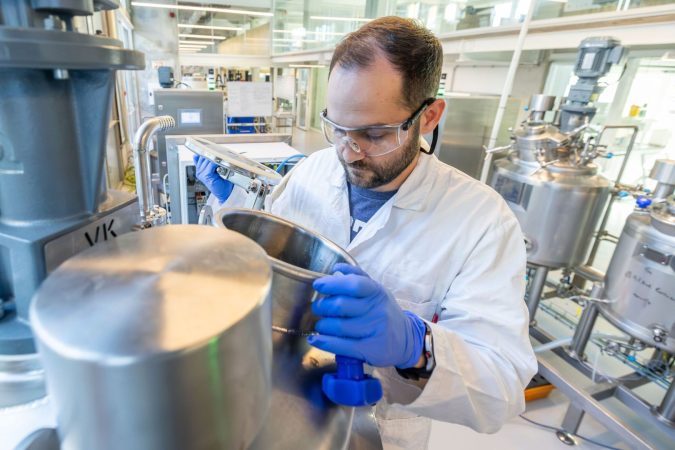
Image: MicroHarvest Laboratory
The potential of alternative proteins
Tijn van Vugt of MicroHarvest admits he had never worked for a fancy startup or even in technology when he came up with the idea for the company he started just over a year ago.
Researching the European food system he saw a lot of polarisation when it came to alternative proteins yet there was so much potential.
“We are in need of an alternative protein source that can help us to build resilience in times of geopolitical tensions, for example. But we also need a protein source that actually solves practical issues for customers and their supply chains”, he explained.
Tijn says that what makes MicroHarvest so special is that it has developed nutritious and healthy proteins at record speeds.
“There are lots of beautiful innovations in labs and in the minds of scientists, but we need scalable solutions”, he said.

MicroHarvest opened its subsidiary in Portugal in 2022 with offices and labs in Lisbon after closing an €8.5 million round to manufacture proteins in a pilot production factory.
The pilot plant marked a critical milestone towards commercialisation, allowing prototype production and testing of production runs for single-cell protein samples for customers.
Its aim is to make a significant contribution to reshaping the landscape of sustainable food production.
MicroHarvest’s proprietary technology enables the sustainable production of high-quality protein ingredients containing over 60% raw protein within just 24 hours.

The pioneering approach significantly reduces resource consumption compared to conventional methods and has the potential to reshape the industry. It offers highly competitive, scalable and consistent protein solutions applicable across diverse sectors, including feed, pet food, and human food.
And the company’s innovative biomass fermentation technology has already garnered significant attention after being honored with the prestigious Bloomberg NEF Pioneers Award.
Doing more with less
As the sole European company to receive this recognition, MicroHarvest has established itself as an industry leader with a vision for a more sustainable future and the launch of the pilot plant is a pivotal step towards the commercialization of this innovative technology.
“Our protein source is highly sustainable and compared to other protein sources has a 98% reduction in CO2 impact,” said Tijn.
The beauty is that MicroHarvest uses regional agri-food side streams as a core input resulting in doing more with less”.
It was also one of the first startups to join Unicorn Factory Lisboa.
“Over half of our people work in Lisbon” he said, adding that the practical application extends to pet foods which is a huge market.
“We treat our pets like children and so there’s a lot of interest in health and nutritious foods for them, and that’s where we can help with our ingredients that have all the amino acids, proteins and vitamins, and so we’re working with pet food companies,” he explained.

Cultivating pork fat
But what about humans? Where is the application there and will it dissuade us from buying our steaks and pork fillets from the butchers?
MicroHarvest specialises in the development of cultivated pork fat – and pork is the most consumed meat in the world.
The company has been inspired by Mission Farms whose mission is to produce sustainable food without sacrificing on taste and is solving some of the downsides of plant-based goods that exist in the market today.
This was the first company in the world to put cultured meat products on supermarket shelves in the US.
“From all the research we have done and all the tests that Mission Farms has done it seems to me that the buying public are ready for these types of product”, said Tijn.
The issue is getting the taste and texture right, and while we won’t be seeing any synthetic steaks on shelves anytime soon that look like the real thing, these proteins can be added to plant sources and do very well in burgers, for example.
“Consumer adoption is not the problem. The problem is doing it at scale and the time it takes for such novel foods to get certification. For cultured meat to really compete with current meat manufacturing will required a lot of equipment and real estate and it’s going to take a long, long time and heaps of investment,” concluded Tian van Vugt of MicroHarvest.
Essential Business was kindly invited by Filipa Pinto de Carvalho of RedBridge to the event held at Heden Workspaces, Rossio, Lisbon which included a curated craft cider tasting of Zidra, carefully produced with pomegranate fruit sourced exclusively from Portuguese farms.
The great difference of ‘Zidra Romã’ lies in the taste and characteristics of the pomegranates harvested at its Quinta da Cortiça, located in the district of Leiria. With just 4% alcohol, Zidra Romã makes an authentic and irresistible drink and an exceptional Portuguese cider which is now being marketed in the UK.