


Spotlight on Coimbra: History, culture and a foodie’s paradise
Text: Peter da Silva
Photos: Supplied &Turismo de Coimbra
This feature aims to spotlight a Portuguese destination recently written about in a British publication. The British market remains the number one market of inbound tourism to Portugal. The spotlight in this edition is Coimbra which was recently written about by British lifestyle journalist and author Liz Hoggard for the Daily Telegraph newspaper.
The annual World Travel Market took place in London in November 2025 and Portugal was one of the leading exhibitors with almost 120 Portuguese companies showcasing Portugal to its number one market: the United Kingdom.
Britain has been Portugal’s number one market for many consecutive years, with growth across the mainland and islands. Portuguese airports continue to break records and Porto airport for example has revealed how it can easily be the entry point from around 15 cities across the UK to north and central Portugal.
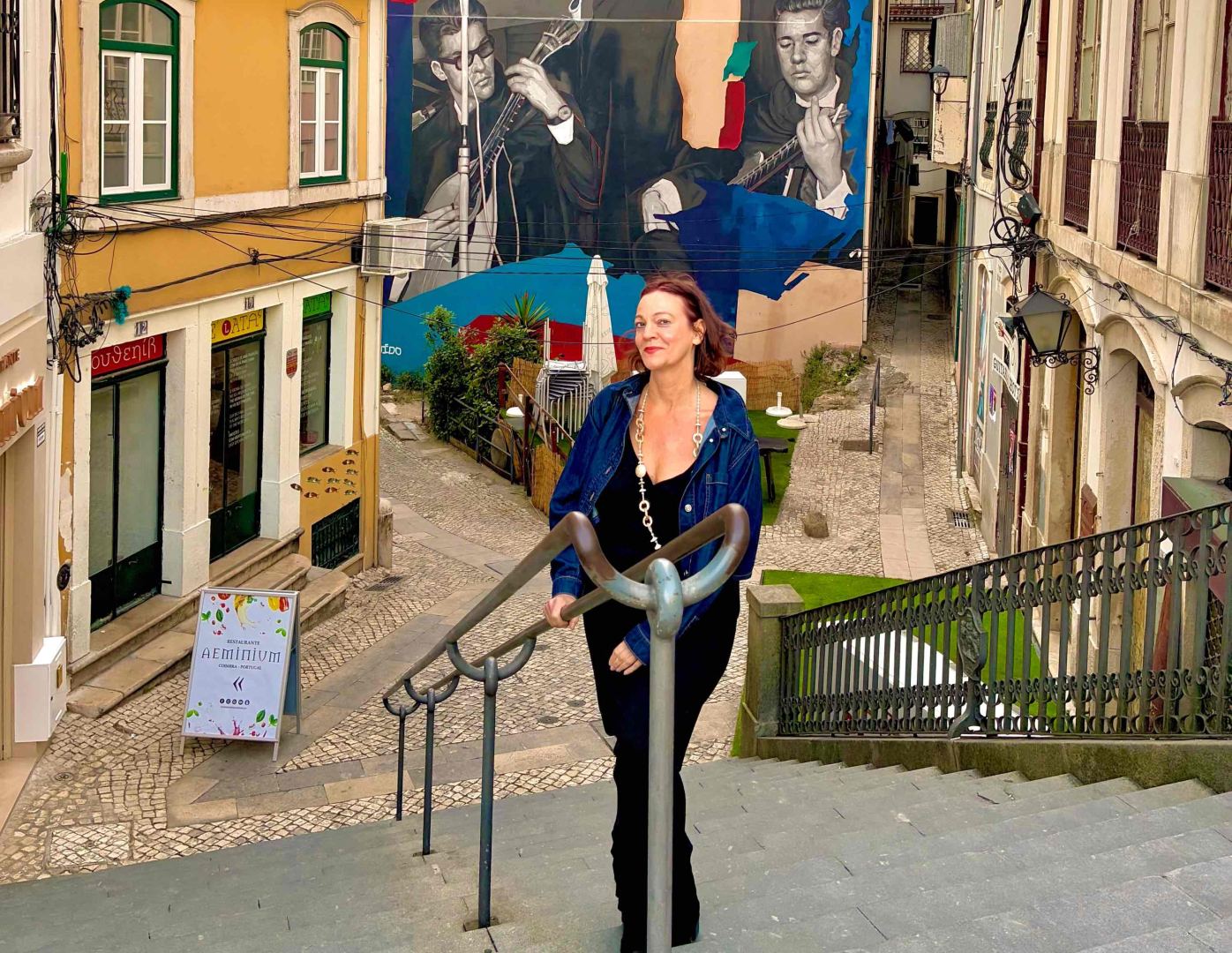
Journalists across the UK media landscape continue to demonstrate a keen interest in showcasing destinations across Portugal, often away from the obvious hotspots. We talked to Liz Hoggard about discovering Coimbra and the wider area including Figueira da Foz for a joint city/beach feature and why this destination appeals to the British market.
The Mondego river runs through the city of Coimbra and as you look up you can see parts of the historic university on one side of the river bank, and the Convento São Francisco on the other side, both sides are imposing and historic.
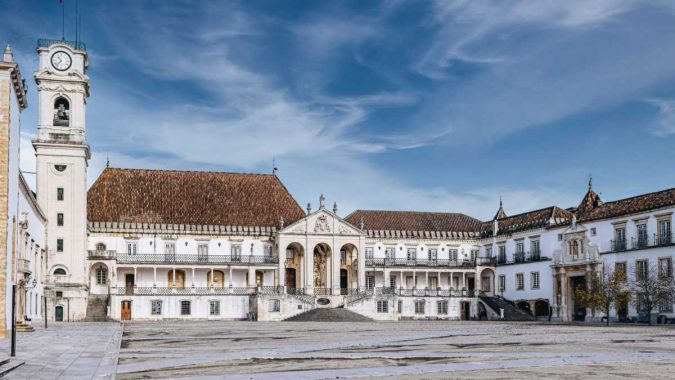
Coimbra – a city combining the old and new
The University of Coimbra, classified as a UNESCO World Heritage Site, is one of the oldest in the world. The Joanine Library is home to extremely rare books including a Hebrew Bible published in the second half of the 15th century – and look out for the secret bat colony which helps maintain the books by eating bugs in the evening! Close to the university is the beautiful 18th-century botanical garden next to the Roman aqueduct, and in the historic old town, the Machado de Castro museum is a must-visit.
Liz explains: “Coimbra combines old and new perfectly. Once the capital of Portugal, Coimbra has always attracted the nation’s writers and artists. And as a university town, it has a reputation for academic and political debate (during the dictatorship it was a hotbed of dissent against the regime). Having so many students around keeps the city young and energetic (you can’t miss them in their famous black gowns which inspired JK Rowling to write Harry Potter). Visitors can easily spend several days exploring both the city itself and the coastal city of Figueira da Foz which is easily reached by train in around an hour.”
The city boasts Roman, Jewish and Moorish influences, a Gothic monastery and a convent. But it is also evolving as a major arts destination. Anozero is the Coimbra Biennial of Contemporary Art, founded by the Círculo de Artes Plásticas de Coimbra (CAPC), Portugal’s oldest institution dedicated to contemporary art.
The bienal continues to grow in popularity with the 2026 edition titled “Segurar, dar, receber’” (To hold, to give, to receive) already confirmed. And now Bienal Manifesta, a travelling European arts platform, which originated in the early 1990s, has selected Coimbra for its 2028 edition. Quite a coup. This will represent an €8 million investment in Coimbra.
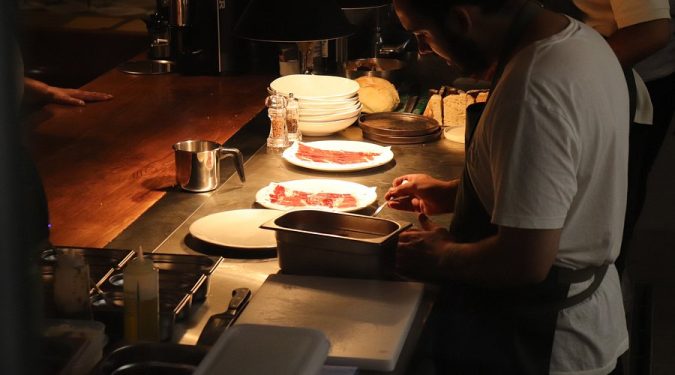
Image: Safra – a classic Portuguese dishes with flair
A culinary paradise
Coimbra’s reputation as a foodie paradise is well-deserved. Liz tells us about some of the independent restaurants and bars that she recently discovered. “You sense there is a huge pride and confidence to the city. It really is percolating with a new cool vibe, thanks to its stylish restaurants (many feature in the 2025 Michelin Guide), fado bars, renovated townhouses and independent boutiques. Take for example the 24-seat Safra in downtown Coimbra, and Olaias at the Arts and Entertainment Centre in Figueira da Foz. Both are run by young couples who are giving classic Portuguese dishes a daring edge, and have designed their restaurants with wit and flair.”
“Neighbourhood restaurants in Coimbra are also of a very high standard. Carolino attracts local businesses during the week for lunch and in the evening it’s a real destination restaurant. I loved SOMM Wine Atelier which serves a wide variety of Portuguese wines by the glass along with tempting bar snacks.
Passaporte is the best place for sunset drinks with views of the river. If you love the classics, the charming Solar do Bacalhau in the Baixa de Coimbra serves traditional Portuguese dishes (salt-cod baked, fried, roasted, or in soups or stew), while O Trovador opposite the Romanesque Old Cathedral is a proper family joint.
Coimbra is a city in love with music (you hear live bands everywhere) and I’d highly recommend supper and a fado concert at the Cultural House aCapella, set in a 14th-century chapel in the Jewish quarter.”
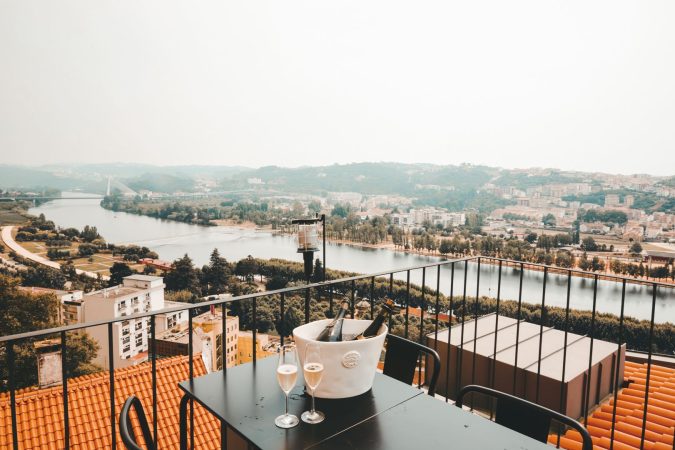
The Sapienta Boutique Hotel offers lovely views over the river Mondego
Accommodation for all pockets
“The city offer a wide range of accommodation for all pockets. The 22-room Sapientia Boutique Hotel, near to the university, is a truly special hotel themed around famous Portuguese writers. For those on a tighter budget the edgy Zero Box Lodge, inspired by Japanese-style ‘capsule hotels’, offers rooms in minimalist wooden boxes with no windows. And you can enjoy shimmering river views from the buzzing first-floor social space, cocktail in hand!”
“In order to get as far beneath the skin of the city as possible, the very experienced guide Jose Manuel Santos of Coimbra based Madomis Tours can be hired for the day (madomistours.pt) to help explore the wider region.”
Great transport links
Coimbra is a city on the move, literally. A much-needed regional transport boost has arrived in the form of a metrobus system called the Metro do Mondego, which will eventually extend 42 km across three municipalities (Coimbra, Miranda do Corvo and Lousã) with an estimated annual passenger count of 13 million.
The €220 million initial investment should drive business across Coimbra and encourage people to leave their cars at home. Tourists can fly into Porto airport and easily make the connection to Coimbra either by train or coach services with Rede Expresso or Flix. Coimbra’s main train station is also undergoing an investment programme and should be connected to the metrobus system soon. A key sign that public transport is being taken seriously in the city – already one sees more cyclists downtown than in many other Portuguese cities – and this is largely due to investment since 2019 into cycle lanes and bicycle storage across the city, making it easier to commute for work and leisure.
With its world-famous university and Gothic cathedral Coimbra has a vibrant backdrop. And thanks to its compact size, it’s a key contender for the ’15-minute city’ concept, especially with the arrival of the new metrobus. The digital nomad scene has grown across the city with around ten larger co-working spaces available including the Work Café by Santander and many smaller spaces. A digital strategy is also adding growth, with a number of multinationals and start-ups establishing themselves in the city. The Coimbra + initiative brings together around 244 hotspots throughout the city offering free Wi-Fi to locals and business and leisure travellers.
A thriving startup and business environment
The city is home to several business drives, including a private sector initiative created to support start-ups offering services support and growth opportunities, both pre- and post-launch. The Coimbra Invest Summit which took place last summer is a sure sign that the city is serious about businesses investing in the city, especially given its young emerging talent. The summit covered sectors including tech, health, tourism and aeronautics and also hosted workshops about cybersecurity and artificial intelligence in business.
The growth of multinational companies in and around Coimbra was also discussed with speakers from Airbus, Cosmehub and Constellation Automation Group, among others. Tech in Coimbra is also attracting wider European and global attention and the Coimbra Tech District recently highlighted the importance of Feedzai which was born in Coimbra. Feedzai is the world’s first end-to-end financial crime prevention platform, protecting people and payments with AI-native solutions that stop fraud and financial crime.
Perenial forest fires
Although the city is a popular tourist destination, we should not forget that this year the wider area to the east of Coimbra suffered terribly from forest fires (2025 saw some of the worst ever forest fires recorded in Portugal). Many communities across the district who use the city of Coimbra for commerce, healthcare and leisure suffered like never before.
This recurring problem makes headlines every summer, but now is the time for the community to look at year-round investment and strategies in forest management. Some land and agricultural initiatives are evolving in the region including Coimbra Mais Futuro 2030. This organisation supports investment and initiatives in the territory, promoting local development, with a primary focus on rural-urban cohesion. Coimbra is the gateway to central Portugal and a must-visit destination for both leisure and business. And with the future in mind Liz comments: “There is an extraordinary energy and style to the city. But it is also built on a human scale. Many students stay on after graduation. And all the locals I met stressed how happy they are to live here, rather than a hectic, big city. Although it more than matches its siblings Lisbon and Porto for history and culture, you sense this is the real Portugal – a brilliant insider secret, just waiting to be experienced.”
In January, the city was inevitably affected by Portugal’s winter storms, particularly Storm Kristen, which caused the River Mondego to burst its banks and flood parts of the low-lying areas of the riverfront. If you or anyone you know has been affected and needs assistance or information, please click on the Link.
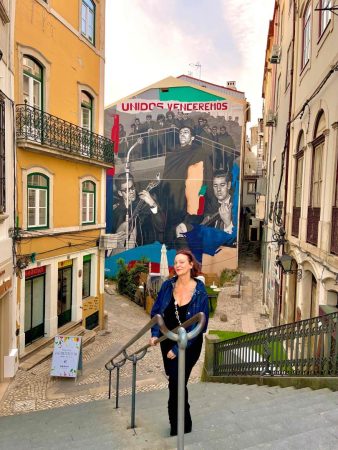
Portugal and Liz Hoggard
Now that we have you…
What is your first Portuguese memory?
In my 30s I had a very stressful fashion assignment to Lisbon for a glossy magazine. I remember sobbing in my hotel room! But then the next day walking along the Tagus river front to Belem completely restored me.
Aside from Coimbra where else in Portugal do you love?
I love Porto, such a brilliantly creative working city with wonderful galleries. I feel huge fondness for Olhão (and the ferry trip to the islands) and a friend introduced me to newly cool Comporta and Melides last year.
Who is your favourite Portuguese musician / artist?
Apart from the wonderful fado singer Amália Rodrigues, I love watching the Royal Ballet dancer Marcelino Sambé and reading novels by José Saramago (I’ve visited his house in Lanzarote).
What is your favourite Portuguese dish?
I always love Nuno Mendes’s crab doughnut – his modern take on the Portuguese bolas de Berlim.
And if you are raising a glass of Portuguese wine, what would it be?
I have a weakness for Vinho Verde and Alvarinho!
Peter da Silva runs Peter da Silva Communications. He works with the British press to promote travel destinations and independent hotels. None of his clients are included in this article.