


Ruinart – the art of fine champagne making
Text & Photos: Chris Graeme; Other Photos: Supplied
When thinking about champagne, the mind first turns to celebrations and the rich and wealthy; celebrities like Joan Collins who famously said that she only drank champagne because “it’s the only drink that never gives you a hangover”.
Then the imagination inevitably wanders to France and the famous Champagne region of Normandy and the city of Reims with its impressive, soaring gothic cathedral where virtually all the kings of France were crowned.
Most people think of Moët & Chandon or Dom Perignon, their minds don’t automatically jump to Ruinart, which is strange when you consider it is the oldest French champagne house having been founded 1729.
Champagne began when the Romans planted vineyards in this region of northeast France in the 5th century. When Hugh Capet was crowned King of France in 987 in Reims, that started a tradition with the local wine being served in the city at coronation banquets.
Currently owned by LVHM Moët Hennessy Louis Vuitton, the maison was founded by Nicolas Ruinart in the region. Nicolas Ruinart realised the ambitions of his uncle Dom Thierry Ruinart, whose statue stands in the winery garden, to turn Ruinart into a dedicated champagne house.
The royal edict that changed everything
Dom Thierry Ruinart was a Benedictine monk who lived from 1657-1709 and was a contemporary of Louis XIV. A theologian and historian, at 23 he left home in Champagne to go to the Abbey of Saint-Germain-des-Prés, a seat of learning near Paris.
While he was there, he was exposed to the court where he learned of the new ‘wine with bubbles’ that was à la mode among the young French aristocracy which had yet to come up with a name for the popular drink.
Interestingly enough, before the 18th century wine could only be transported in barrels which, of course, ruined champagne’s sparkling quality and explains why the drink was largely confined to local markets.
That all changed in 1728 when Louis XV issued an edict permitting champagne to be transported in bottles.
On September 1, in Reims, the nephew of Dom Thierry, drafted the founding charter of Maison Ruinart, creating the world’s first ever champagne-producing company.
Nicolas Ruinart sent out his first batch of “wine with bubbles” in January 1730 as a gift for cloth purchasers since Dom Ruinart’s brother was a cloth merchant.
The winery became so successful that within six years the family ceased cloth trading and devoted themselves entirely to champagne production.
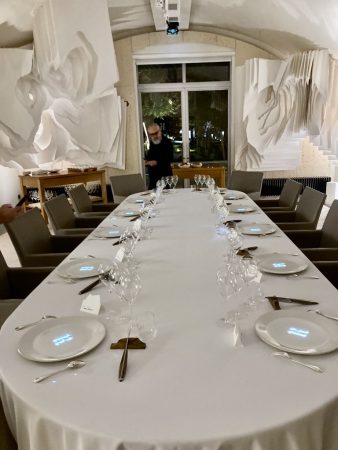
A Michelin chef dinner to remember
Maison Ruinart works with several famous chefs when they organise lunches and dinners for VIPs and groups of tourists and visitors.
These include Arnaud Donckele (3 Michelin stars), Alexandre Gauthier (2 Michelin stars), David Toutain (2 Michelin stars), and Adam Byatt (1 Michelin star).
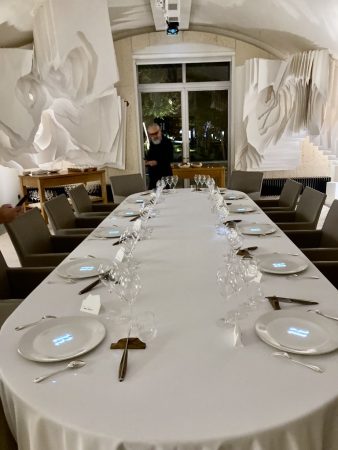
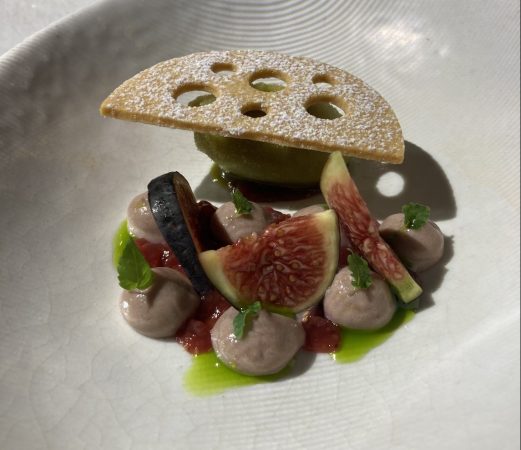
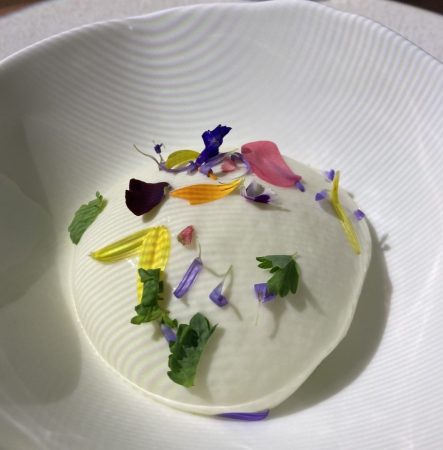
With other media colleagues, I was treated to a lovely dinner served with a sophisticated menu served with appropriate Champagnes including Ruinart Blanc de Blancs served with the starter: squash, citrus fruits, tagetes oil; Dom Ruinart Blanc de Blancs 2013 served with the fish course: turbot, celery, mountain sorrel, champagne sauce; Dom Ruinart Rosé 2009 served with the main course: poultry, salsify, porcini mushrooms, coffee-infused jus; Ruinart R Vintage 1996 served with reworked Chaource cheese; and Ruinart Rosé served with figs and a creamy pomegranate sorbet with tarragon.
Preparing and presenting our elegant fine dining experience were Sophia Rudolf originally from Berlin and Chef Armand Arnal.
Screenshot
A deep-dive into the Ruinart cellars
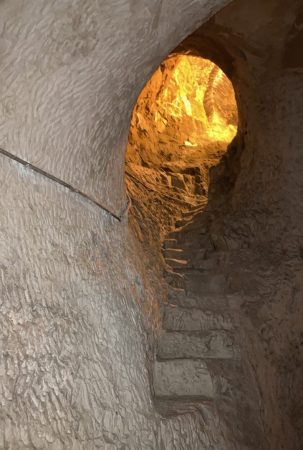
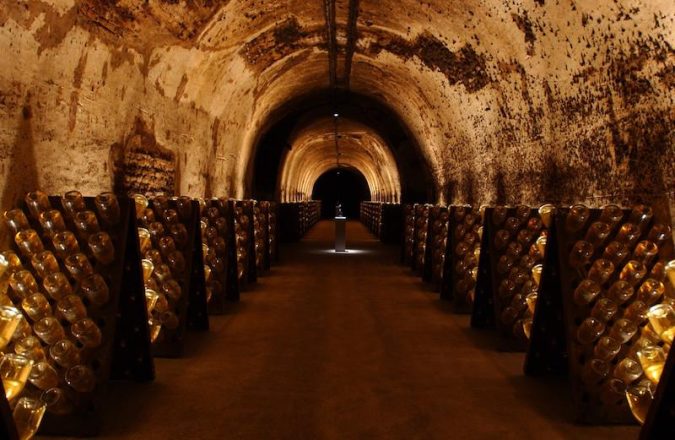
Deep, damp and cavernous, Ruinart’s wine cellars descend down through layers of soft limestone formed from shells and coral laid down 100 million years ago in the late Cretaceous period when the region was a shallow sea.
These were actually inhabited, probably during times of stress, in the Paleolithic period as attested by the eerie naive faces carved in the chalk that peer out from the walls as the visitor descends the steep staircase cut into the chalk that leads down to eight kilometres of tunnels.

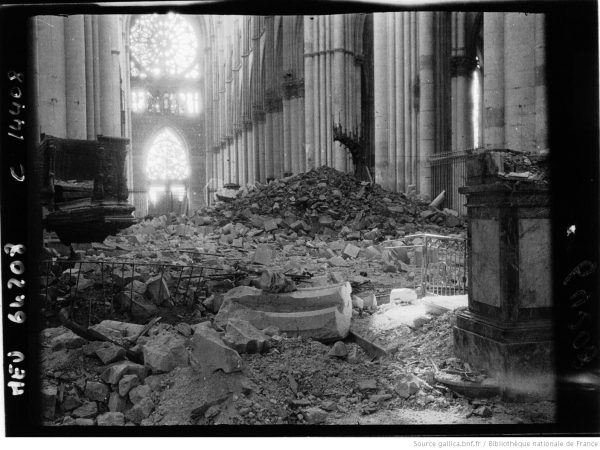
During World War I, the city of Reims was on the front line and was shelled for over 1000 days and nights by the Germans. It destroyed 80% of the city and caused massive damage to the cathedral.
Nevertheless, the bombardments resulted in thousands of casualties, and the shelling of Reims cathedral became a symbol of German barbarism and was used as a powerful propaganda tool for the allies.
Because the Ruinart caves or crayères at 40 metres are so deep, not surprisingly the population that had not fled the city, whose historic centre today has been completely restored, took refuge in these UNESCO World Heritage caves.
A similar fate was meted out to the city in World War II, but to a lesser extent, and cathedral was spared. However I am reliably informed that the Ruinart wine cellars were not used to store looted art by the Nazis, although, of course, they did take all the Champagne! By the way, the final surrender of the German forces to the allies took place in the city on May 7, 1945.
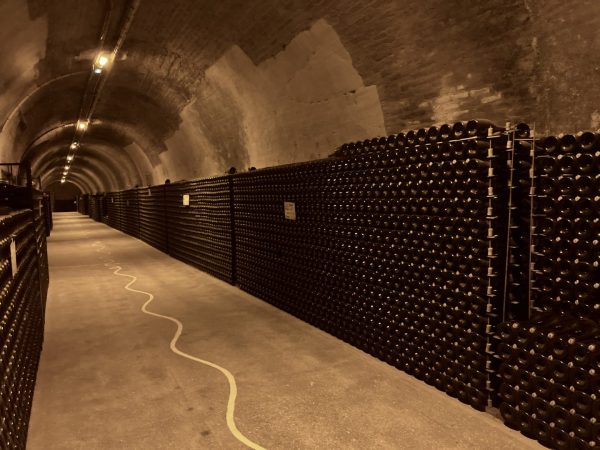
Here the extensive tunnels house the estimated 2.5 million bottles that the maison is said to produce annually for which turnover figures are not published because LVMH has many champagne brands, although the Moet Hennessy division in 2024 was said to have made a modest €1.8 million.
Here the wines are left to mature at a perfect temperature of 10-12c. The specific maturing time varies by cuvée, with non-vintage wines aging for at least 2 to 3 years, and vintage wines like Dom Ruinart aging for a minimum of 9 years.
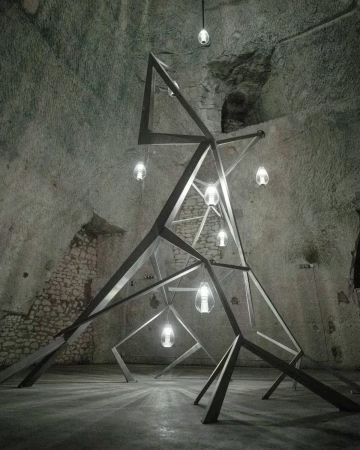
The central area of the caves boasts an impressive light and sound installation ‘Chorals’ ( Above) created by Julian Charrière which uses light, water, and underwater sounds to connect the geological history of the chalk cellars with the current state of the oceans.
Today, the tunnels are used to stack the bottles of champagne which were tended by the Cellar Master Frédéric Panaiotis from 2007 until his untimely death in a diving accident in June this year.
The internationally renowned Chardonnay expert has been replaced by oenologist Caroline Fiot, officially taking over the role on January 1, 2026.
Ruinart – where art, wine and history meet
Speaking of art, Ruinart has had a close relationship with artists for well over a century and is involved in several international events including ARCO, the Foire de Bale, the Carre Rive Gauche, London Design, and Miami Art Basel.
Celebrating its 300th anniversary in 2029, the house is preparing lavish commemorations with a strong focus on art.
Over the next few years 10 artworks will be commissioned and unveiled, each designed to perpetuate the vision created since its founding with pieces that reflect art, nature and technology.
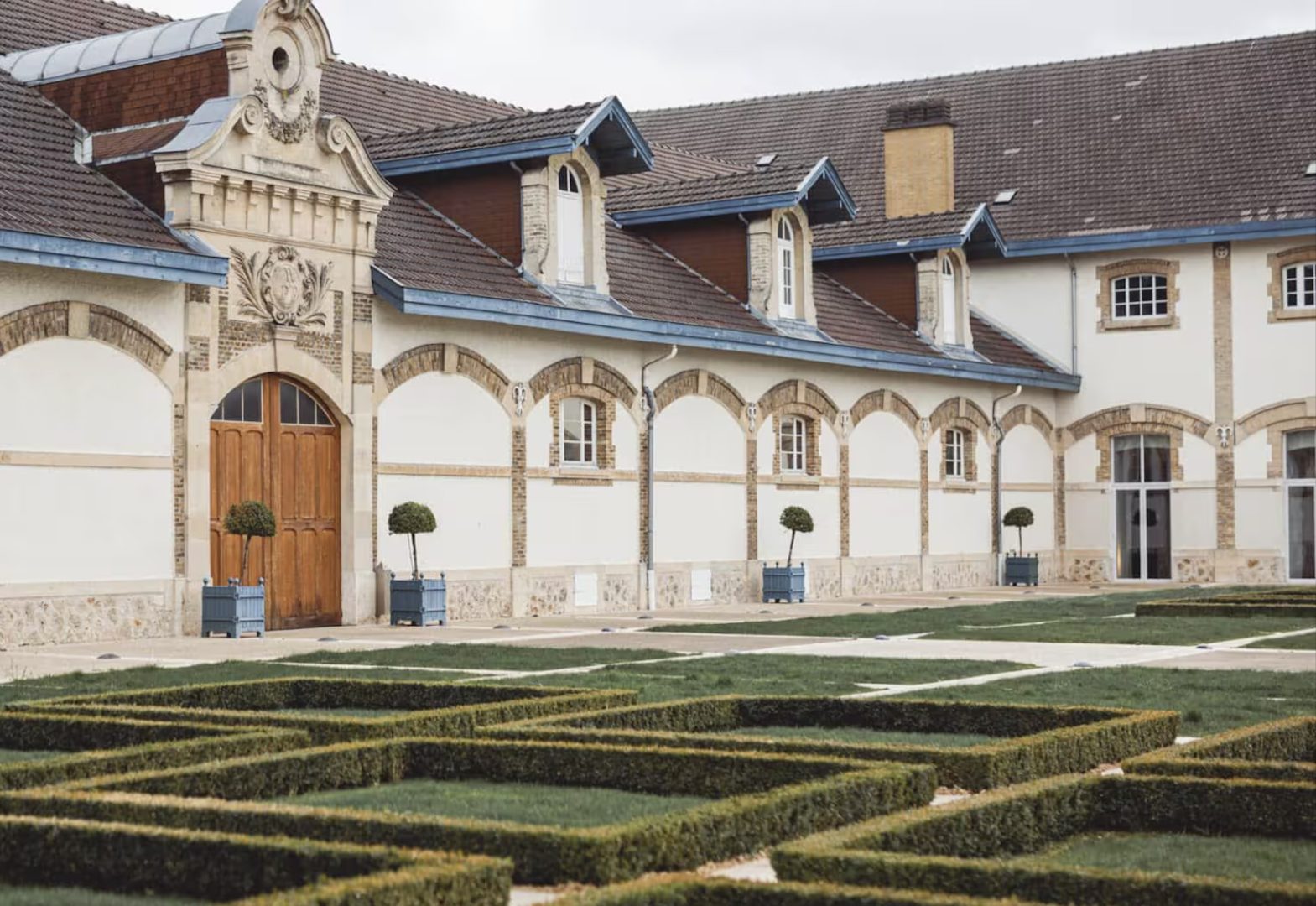
The low-lying building of the Ruinart winery built around a courtyard did not escape this fate and were largely destroyed. Not that you would notice today as they have been fully restored.
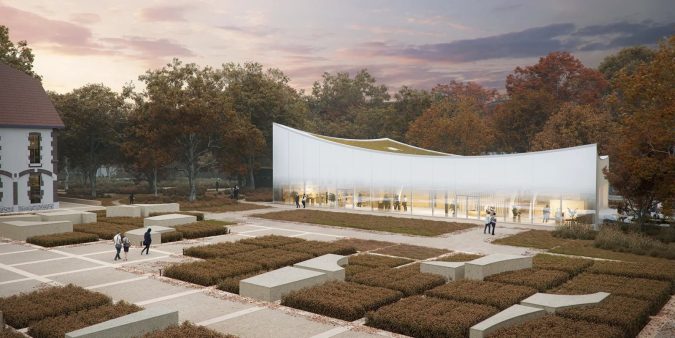
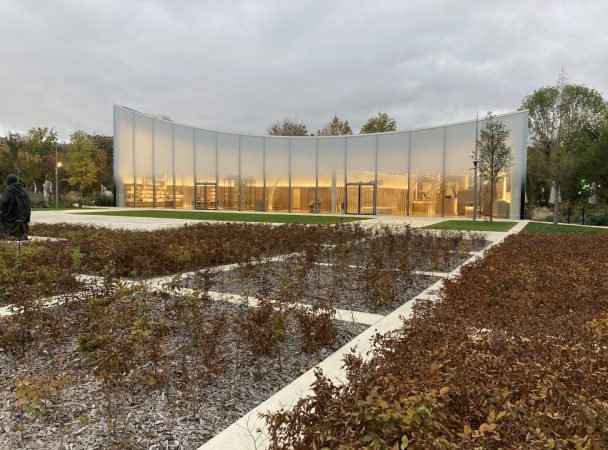
In fact, there is a stunning new addition to the winery – the Nicholas Ruinart Pavillion (Above). This is an amazing contemporary structure with huge expansive windows looking over the courtyard and garden, lending it an almost ethereal, weightless quality.
The contemporary glass and local stone structure by Japanese architect Sou Fujimoto was inspired by the chalk pits and champagne bubbles. It includes an art galley, a visitors centre, a champagne bar and shop.
Inside the pavillion there is also a refrigerated cellar containing exclusive cuvées or blended champagnes of a high acidity and purity.
The building, of which the architect said: “this transparent building is like Ruinart – both heir of traditional savoir-faire, symbolized by the champagne-coloured dressed stone and the innovative upswept roof” is completely sustainable.
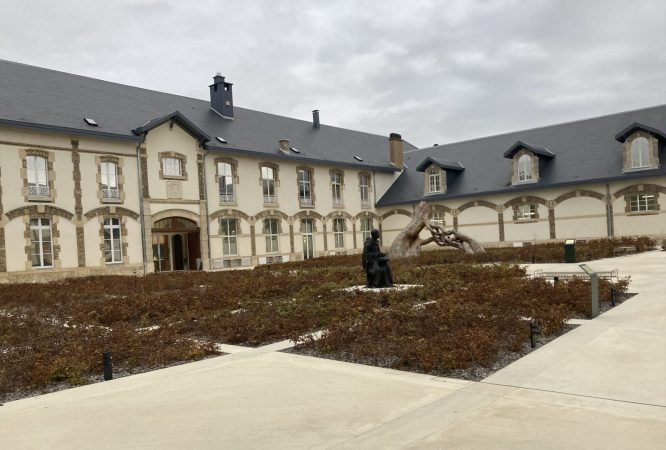
Special glass reflects the summer sun and keeps the building cool in summer, and bio-based insulation retains heat in the winter, while the trapeze-shaped sloping green roof acts as a reservoir, channelling rainwater and collecting it for use in watering the lovely gardens (Above) within the Butte Saint-Nicaise Park.
In fact, the entire ensemble of buildings has been a UNESCO World Heritage Site since 2015. The building is at the heart of a new experience programme designed to promote wine tourism in Champagne.
Here too, pieces of art in the form of sculpture grace the gardens, including a wheel-like aluminium structure entitled ‘Modified Social Benches #44’ by Danish artist Jeppe Hein and ‘The Nature Calendar’ flag by British artist Marcus Coates.
The garden itself, designed by landscape designer Christophe Gautrand, boasts 20 or so sculptures by contemporary artists such as Eva Jospin, Pascale Marthine Tayou, Dewar & Gicquel, Tomoko Sauvage, Côme Di Meglio, and Nils Udo.
Inside the pavillion the space designed by Gwenael Nicholas is flooded with light. The space is bright and airy with striking white curved stakes, creating a modern gallery space.
Ruinart aims to double the pavillion’s visitor capacity to 50,000 per annum by the 300th anniversary celebrations in 2029 from the 26,000 or so at present.
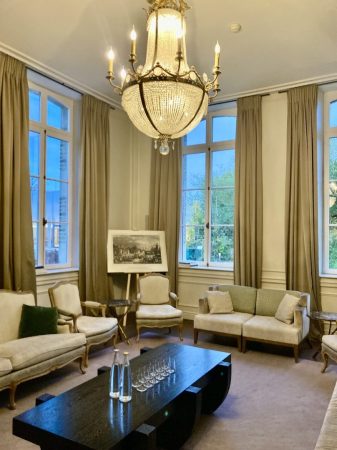
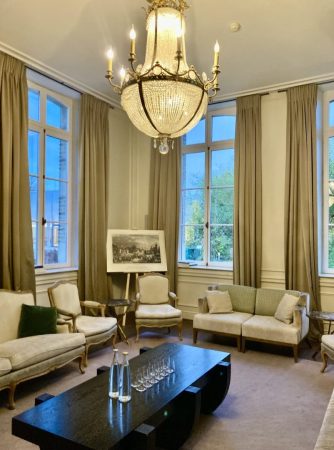
Our tour continues in the main building’s beautiful Loius XV-style cabinet (Above) dominated by Jean-François de Troy’s panting ‘Le Déjeuner’s d’Huîtres which famously displays the distinctive Ruinart shaped bottles, I ask about the Napoleonic Wars and if trade ground to a halt because of the war.
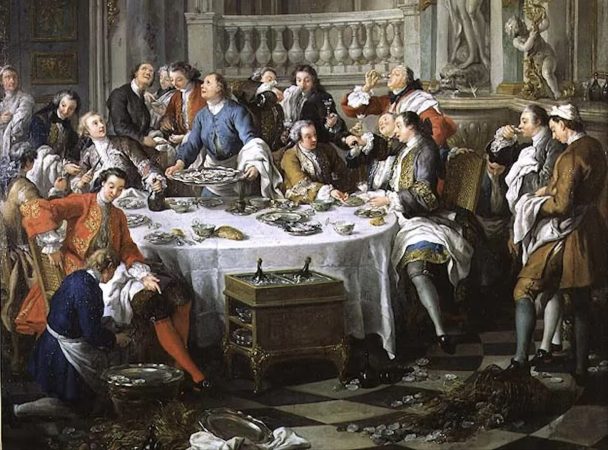
The English aristocracy certainly were not able enjoy Ruinart champagne because of the blockade between Britain and France, so the English were forced to endure local English sparkling wines subjected to a second fermentation in the bottle.
However, in France, champagne became a symbol of military triumph and celebration, famously associated with Napoleon and his Hussars, who would open bottles with their sabres after victories. Napoleon’s army distributed large quantities of champagne to troops, and his personal relationship with champagne producers helped elevate the drink’s international status.
A trip to the vineyards
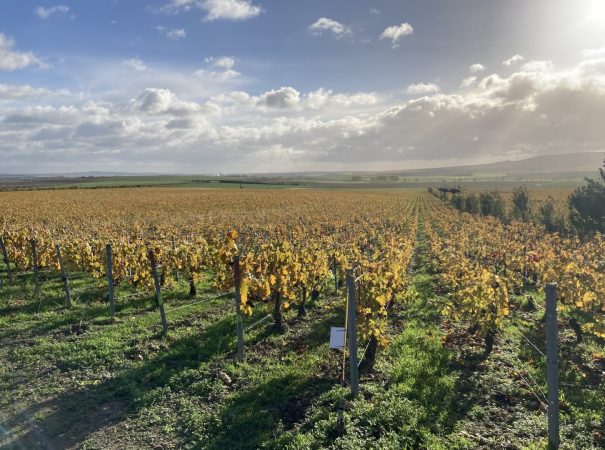
On a cold, crisp October morning with a biting wind and clouds that threatened rain, we visit the vineyards or terroirs near the remote village of Taissy, a 20-minute drive from Reims. The maison uses grapes from two terroirs in the area – this one near Taissy and another at Sillery.
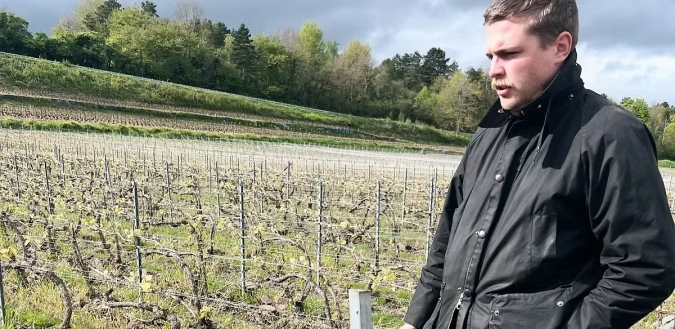
We are met by Ruinart’s Head of Development & Innovation Victor Gandon (Above) who was born and raised in the region and shows us around the 40-hectare vineyard.
“It’s actually quite large for a single champagne vineyard from one house because champagne vineyards are usually much more fragmented comprising a total of 35,000 hectares for the whole region,” he informs.
Local family wine growers actually farm the land, and Victor explains that the individual family-owned terroirs are often small because winegrowers in the past had several sons and passed vineyards down to their children who sub-divided the land between them, thereby creating smaller vineyards.
“We have a lot of people that still own a very small part of the original vineyard, cultivate it and sell the grapes to the merchant, in this case Ruinart, but usually its a second job for them,” he explains.
Under French law, the farming has to be organic, which means that the winegrowers can only use pesticides twice during the growing season – once in May and then in August. The grapes are harvested in September.
The challenge of climate change
Climate change has become a problem too from which the growers have had to adapt.
“Traditionally, we had hard winers, rainy autumns and cool summers, but that has changed. Now we have milder winters, cool autumns and rainy summers that are also sometimes very hot. Some years we have two extremes, and we have had to adapt which has produced some very interesting wines with exotic fruit tones.”
Sillery is the only terroir classified as a Chardonnay Grand Cru near Reims and is one of the oldest Grand Crus on record and is still owned by the Ruinart family, now in its third generation.
At Taissy, a few kilometers away, the vineyard that is classified as a Premier Cru is mentioned in the archives as far back as 1733.
Biodiversity and pest control
The 40-hectare terroir we visit is planted mostly with Chardonnay vines aged between six and 18 years. Victor explains that Maison Ruinart has planted rows of hawthorn and dogwood hedgerows, as well as beech and spindle trees to act as windbreaks, in a biodiversity drive to encourage birds and other wildlife to pick off the insect pests that feed of the grapes and leaves. This vitiforestry project is being carried out with Reforest Action.
The pests include phylloxera, a tiny, aphid-like insect that migrated from the US and devastated European vineyards in the 19th century. It has two forms: one that lives underground and feeds on roots, and another that lives above ground and feeds on leaves. Modern viticulture relies on planting vines grafted onto phylloxera-resistant rootstocks.
Other pests are grapevine moths that feed off different parts of the plants throughout their lifecycle, and mealybugs which feed on the sap and excrete honeydew which promotes the growth of the powdery and downy fungi that weakens the vines.
Then there are leafhoppers that feed off the sap of the grape leaves, causing yellow and white spots.

A sudden downfall of rain forces us to decamp to a research block which has a meeting-cum-lecture room with white boards and film/powerpoint presentation projector to begin a second round of Champagne tasting. (At 11 am!) tutored by Victor Gandon and Jean Baptiste Duquesne, Head of Communications for Ruinart/LVMH.
Links to Portuguese cork
Interestingly enough, Ruinart has forged a close relationship with the Portuguese cork company Corticeira Amorim and even conceived a programme some eight years ago with the company to help the victims of those who lost their homes and livelihoods because of the forest wild fires.
“Amorim produces the cork stoppers that we use for aging but these are not the same ones that are used for the end consumers. One of the reasons we buy the cork stoppers from Amorim is that they are certified free from TCA (Trichloroanisole), a chemical compound that makes wines taste dull and muted”, explains Victor.
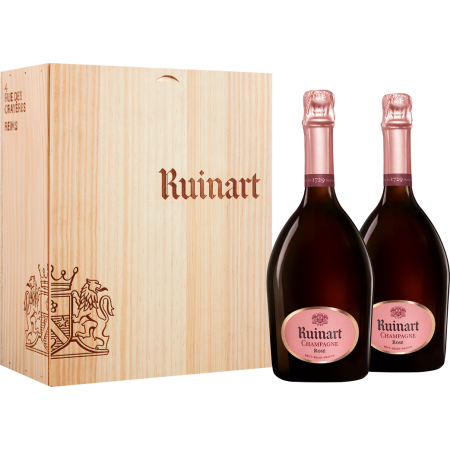
In 2026, Ruinart will launch its Dom Ruinart Rosé 2013 which will be the first of their rosé wines – it was the first champagne house to market rosé champagnes – aged using Amorim cork.
Ruinart – the Blancs de Blancs
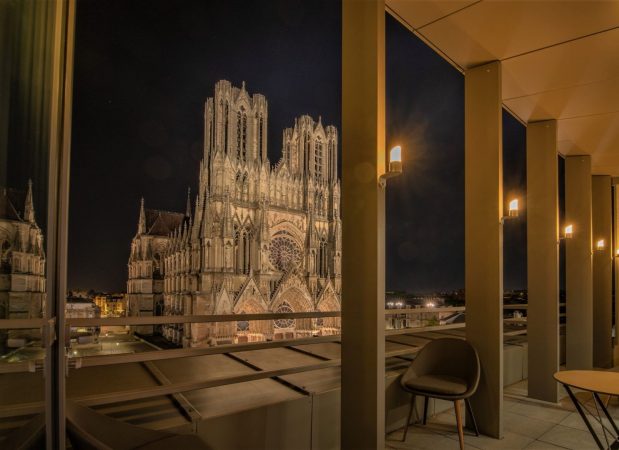
I have to say that I have never in my life been on a wine tasting session at 11am and was only thankful I’d had a hearty breakfast that morning at the five-star La Caserne Chanzy Hotel & Spa where we had stayed overnight within full view of the cathedral.
It was a bit like being back at university again with a fascinating lecture from Victor and Jean-Baptiste on Ruinart’s Blanc de Blancs.
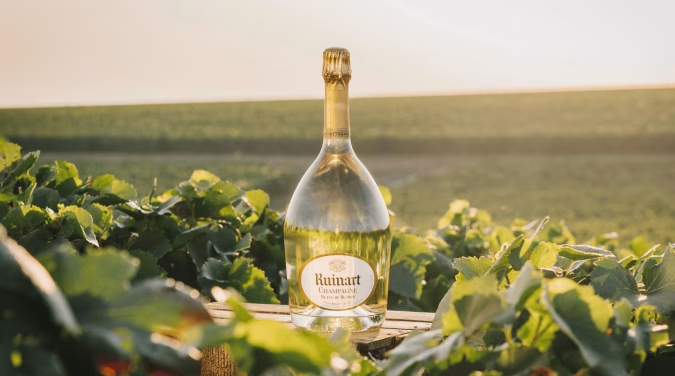
Famous for their aromatic freshness and elegant simplicity, these wines are pale yellow in colour with almond and jade hues. They smell fruity with a bouquet somewhere between peach and pear unfolding with hints of magnolia, ginger and berries.
On the palate, the wine is rounded with a lively aromatic freshness of ripe citrus and exotic fruits that makes way for a delicate mineral taste.
This 100% Chardonnay cuvée goes well with fish and toasts topped with avocado pear, for example.
This is followed by the Blanc Singulier Edition 19 – a blend of 77% wines from the 2019 harvest and 23% reserve wines.
It is primarily made from about 20 crus (meaning villages whose grapes have been classified by quality with the term ‘Grand Cru’ given to the highest ranked 17 villages and ‘Premier Cru’ to the next level of 44 villages).
The champagnes come from the Montagne de Reims villages Sillery and Taissy; Côte des Blancs (Bergères-les-Vertus, Cramant); Grande Vallée de la Marne (Yes, there was a famous battle in the region here in World War I) (Dizy); Vallée du Petit Morin (Villevenard); Sézannais (Montgenost) and Vitryat (Couvrot, Bassuet).
The reserve wines for this cuvée come from a reserve started in 2017 with the first blending and have been supplemented with a part from the 2018 blend. Half of these reserve wines were aged in oak casks, while the other half was aged in stainless steel tanks.
The wine has a bright golden yellow colour with light green reflections. The scent is aromatic, intense and rich with hints of nectarine and nachi pears and unveils to reveal aromas of candied angelica and musk rose with hints of honeysuckle.
On tasting, its freshness gives way to an aromatic range of fruit juice and citrus with more candied and floral tones mid-palate. The finish is marked by light, bitter notes of grapefruit. It too goes well with fish dishes.
Lunch in a chateau
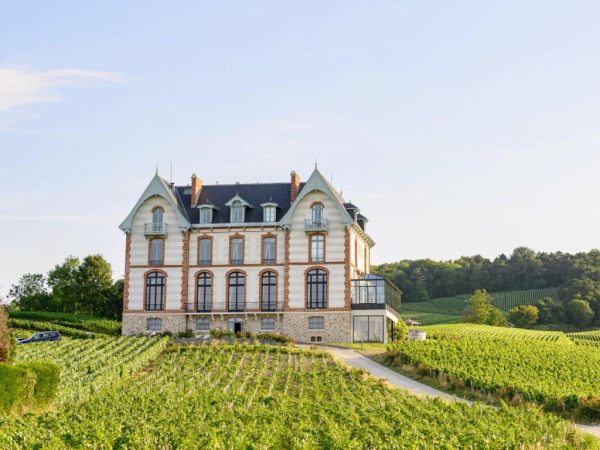
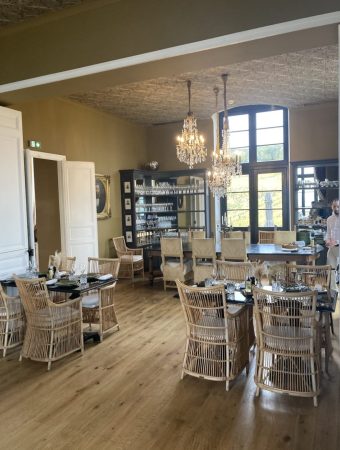
Before rounding off our visit to Ruinart with a trip to Reims Cathedral, lunch was partaken at the lovely Millésime Group’s Château de Sacy located on the Mount of Reims in the village of the same name.
In the heart of the vineyards, this intimate boutique 12-room hotel has a light-filled restaurant with a rustic feel serving refined cuisine highlighting local products.
On the menu is stuffed Brie de Meaux with lemon parsley, caramel and Parma ham foam served with Ruinart Brut Champagne for starters, followed by a main course of sea bass fillet with miso-glaze, pointed cabbage and sauce vierge with a glass of Ruinart Blanc Singulier Édition 19, rounded off by the dessert, raspberry Pavlova and a glass of a fresh Ruinarte Rosé.
Famous champagne quotes:
“Remember, gentlemen, it’s not just France we are fighting for, it’s champagne!” – Winston Churchill, former Prime Minister of the United Kingdom.
“Champagne is the only wine that leaves a woman beautiful after drinking it.” – Madame de Pompadour, member of the French court during the 18th century.
I only drink champagne on two occasions, when I am in love and when I am not.” – Coco Chanel, French fashion designer.
“Only the unimaginative can fail to find a reason for drinking champagne” – Oscar Wilde, Irish poet and playwright.
“Champagne and orange juice is a great drink. The orange improves the champagne. The champagne definitely improves the orange.” – Prince Philip, Duke of Edinburgh.
Photo captions:
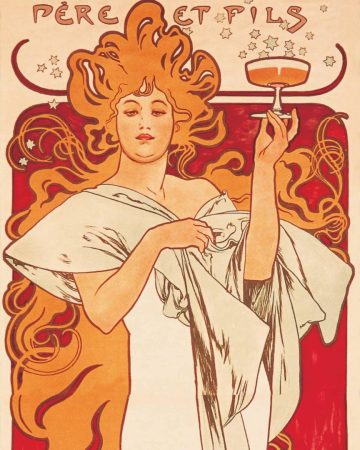
Ruinart’s classic art nouveau advertisement by Czech artist Alphone Mucha dating from 1896. This poster became a sensation with the artist becoming one of the leading figures of the Art Nouveau movement.
‘The Wine of Connoisseurs’ – Ruinart Brut Champagne advert for the United States market dated 1986.

View of the interior of the Reims Cathedral from the coronation area, 1917. Bibliothèque nationale de France, département Estampes et photographie, EI-13 (2570).
The staircase carved into the prehistoric limestone caves that wind down to Ruinart’s 300-year-old wine cellars. The tunnels run for eight kilometres in total!
The elegant yet rustic restaurant at Château de Sacy.
The beautiful Louis XV cabinet which opens out to two modern multipurpose conference/ events rooms.
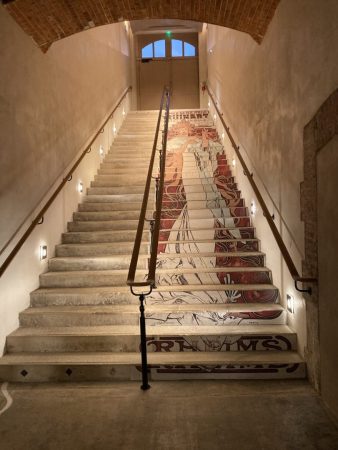
The central staircase leading to Ruinart’s dining room features a rendition of the famous Art Nouveau advertisement by Czech artist Alphone Mucha.
The wine cellars comprise long tunnels where the wires are left to mature at a perfect temperature of 10-12c. The specific maturing time varies by cuvée, with non-vintage wines aging for at least 2 to 3 years and vintage wines like Dom Ruinart aging for a minimum of 9 years.
The dining room where private parties can enjoy Michelin-star lunches and fine dining accompanied by the best champagnes and where a film show tracing the history of Ruinart is protected onto your plate.