


Branded residences sector enjoys bumper year
2025 has been another resounding year for branded residences globally with the total number of schemes expected to rise from 764 (December 2024) to 910 by the end of 2025, reflecting a staggering year-on-year growth of 19%. This year alone saw 25 countries offering their first ever branded residential project, 39 new hotel brands and 19 new non-hotel brands according to real estate consultants Savills.
And Portugal is leading the growth of Branded Residences in Europe with 15 recent projects to be launched by 2031.
More than a passing trend, these developments are consolidating as a new standard in the real estate market.
Over the next five years, Portugal will be the European country with the largest pipeline of Branded Residences, consolidating its position as one of the most dynamic markets in this segment.
According to the study Branded Residences: Portugal Snapshot 2025, by Savills Global Residential Development Consultancy, 15 new projects are planned, which will add more than 1,200 units to the Portuguese market by 2031.
The global trend of Branded Residences – residential developments associated with luxury brands, often linked to the hotel industry – has been expanding rapidly, combining exclusivity, premium services and a highly sophisticated lifestyle. Portugal stands out in this scenario, driven by strong international demand and the appeal of its coastal lifestyle.
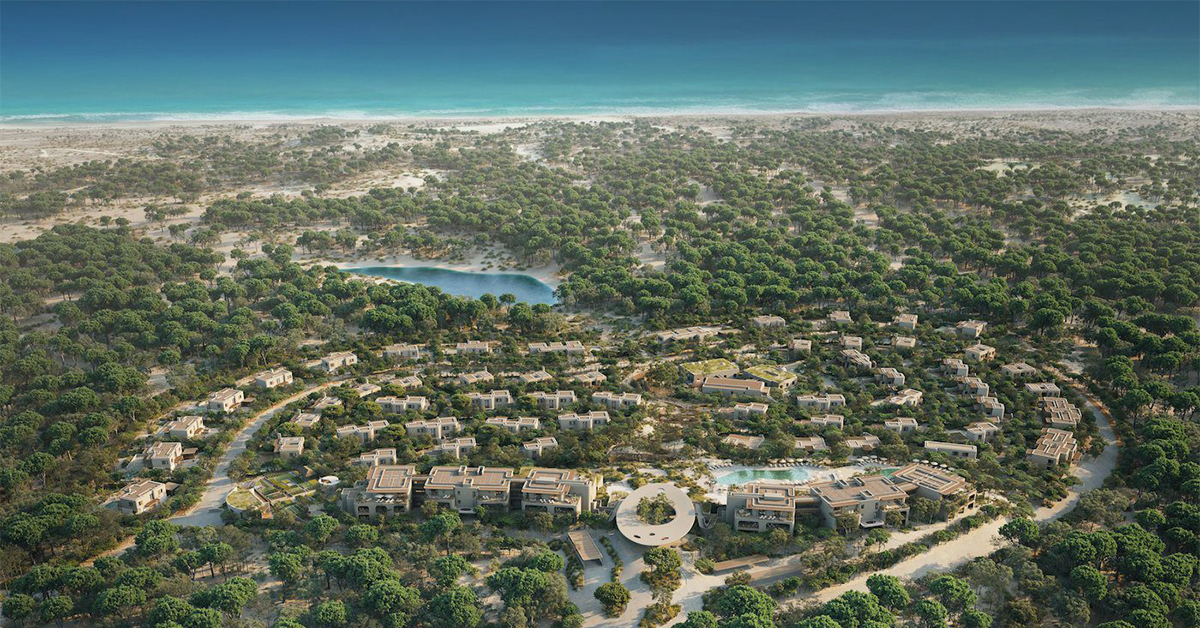
Currently, the country already has 11 completed projects, of which 72% are resorts. The Algarve and Lisbon remain the fastest growing areas, with seven new developments in the Algarve region (800 units) and four in the capital (174 units). However, other regions are beginning to emerge, such as Comporta, which is being touted as the next major luxury destination.
In the European landscape, the Branded Residences sector is expected to grow 180% by 2031. In 2024, Europe was the third most active market, behind North America and Asia-Pacific, accounting for 18% of the global network. Portugal stands out for having larger projects compared to other countries in the region. While Spain forecasts a total of 1,300 units by 2031, Portugal is expected to exceed 2,300 units.
Lisbon, in particular, already ranks second in Europe in terms of the number of urban projects, just behind London. This fact highlights the growing attractiveness of the Portuguese capital for both investors and international residents.
While luxury hotels continue to dominate the sector, there is a new trend that is stating to gain ground – Branded Residence associated with non-hotel sector brands.
These currently represent 21% of the global market and more often than not are concentrated in urban areas.
Portugal is already beginning to mirror this trend with projects like Karl Lagerfeld and YOO Studio in Lisbon which are the first two projects under a non-hotel brand in Portugal.
According to Paula Sequeira, Head of Consultancy & Valuation at Savills, in addition to Lisbon and the Algarve, Porto is emerging as another destination for this type of development. The city is consolidating itself as an international hub for business, tourism and new residents, creating opportunities for new projects. For Louis Keighley, Head of Development Advisory at Savills, the diversity of developers and brands entering the national market reinforces investor confidence. The growth of the sector in Portugal follows a global trend of exclusivity and luxury lifestyle, consolidating the country as one of the most relevant markets for the future of Branded Residences.