


Banco Português de Fomento – putting Portugal’s public and private companies first
Text: Chris Graeme; Photos: BPF/Fernando Bento (ICPT)
Nine months ago, when management executive Gonçalo Regalado took up the gauntlet to run Portugal’s sovereign development bank Banco Português de Fomento and cherry pick a team of talented young professionals to work with him, he was faced with a tall order.
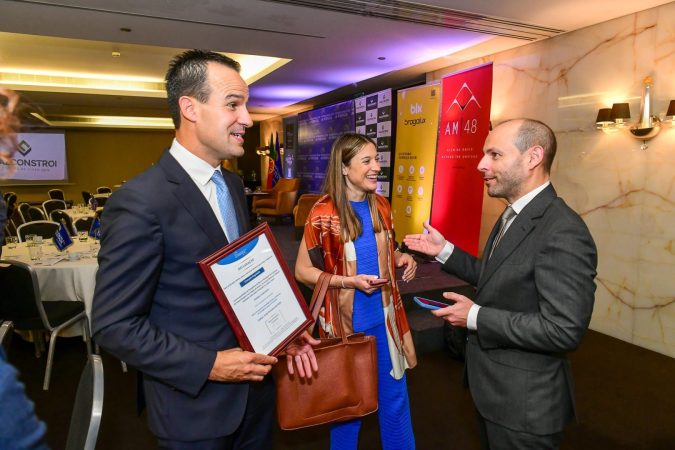
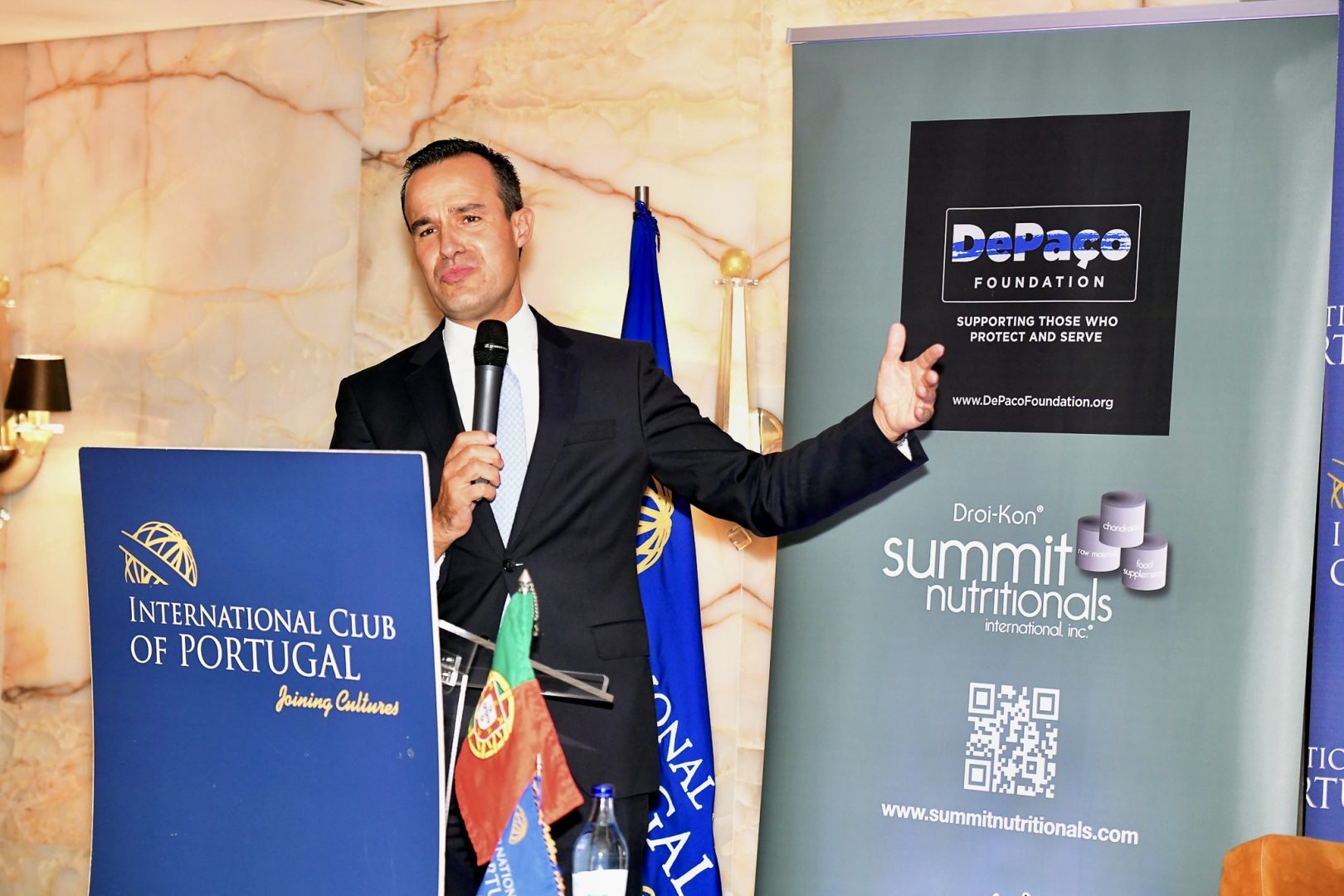
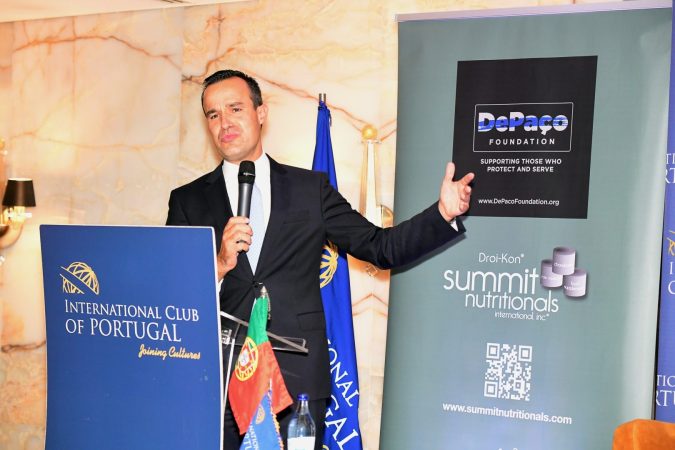
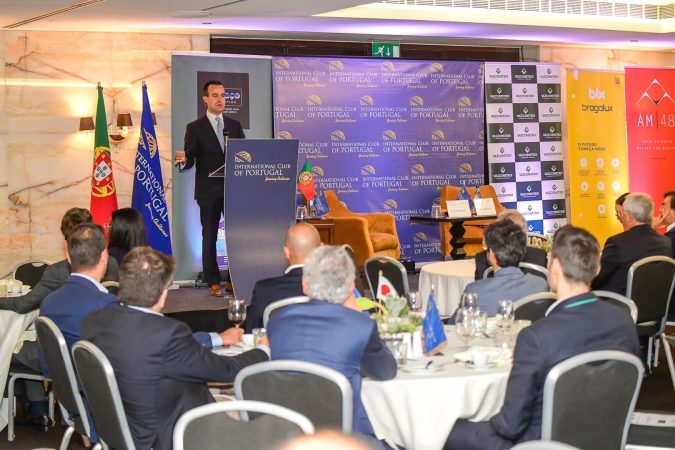
The executive, who had had an impressive track record in the banking sector, and had turned down several plum banking jobs that would have paid a much more handsome salary, was faced with an institution where the choice was to close up shop or dramatically turn the ship around. At the International Club of Portugal (ICPT) on Tuesday he outlined the challenges, changes and ambitions.
Falling short on every level
For 30 years, since 1995, Portugal had tried to establish a successful development bank that would be at the service of companies, entrepreneurs and the economy, but somehow it never quite worked as it as should have. It always fell short.
“We started from a very low level. In all the European rankings, Portugal and the Banco Português de Fomento was in the bottom three – in granting credit, grants, guarantees, capital instruments, in our capacity to be a multiplying factor for the economy, in our impact on Portugal’s GDP, and in the number of companies we helped – just pick an indicator, we were always in the bottom three along with countries like Malta, Montenegro and Albania”, he said.
In just nine months the development bank is on track to invest €7Bn of direct investment through the bank’s own instruments, representing 2.3% of Portugal’s GDP.
“That might seem little or easy, yet it’s anything but. We found a bank that was all over the shop – just one person on the executive commission, a board that met every fortnight and with alternating members”. Gonçalo Regalado lamented.
730 deficiencies – 18% churn rate
The bank had no decision-making committee apart from a deficiencies committee where we had 730 deficiencies. “We had a number of glaring impairments to sort out, and so many of the challenges and mistakes seen over the past 15-20 years in the Portuguese banking sector were all alive and kicking in the Banco Português de Fomento.
“That’s what we found, and we also discovered a team with their arms crossed and a churn rate of over 18%” added the executive.
Now, imagine what it’s like to have an institution with 650 people, with nine companies, and an eighteen percent churn. More than a hundred people had left the bank the previous year, of their own free will. That’s what Gonçalo Regalado found. But looking to the future, the bank now has a young team with an average age of forty-four. It was time to “do and deliver”.
“We rolled up our sleeves and, as a whole group, decided and determined to put the bank at the service of the entrepreneurs. We made difficult choices that are unusual in public life. It is unusual in public life to put the entrepreneur in front of the governor. It is unusual in public life to put the company in front of the auditor, regulator or supervisor. We held the entrepreneurs, the companies and the economy up as the ‘Holy Grail ‘of the Development Bank”, he said.
Reducing red tape in credit approval processes
The bank started to issue pre-approved guarantees for loans. It first issued one hundred and twenty thousand guarantees. Now there are one hundred and fifty thousand guarantees, without the entrepreneurs asking for anything. It simplified processes. To have a guarantee of €50,000 of credit, 27 documents were needed and it took 49 days. Banco de Fomento has reduced this to five documents and now it takes less than a week.
The bank was restructured like a commercial bank; its entire executive team has a private mindset and was picked from the private sector, and has a private business capacity.
He brought in its Chief Technology Officer from the bank BCP. Its Chief Commercial Officer came from HSBC after 17 years of an international career. Its Chief Investment Officer came from a background at Montepio, Banco Espírito Santo and Santander, and public venture capital company Portugal Ventures.
The bank’s risk manager came from the private payments services company SIBS and the commercial banking sector. Its financial manager came from insurer Allianz. In other words, Banco de Fomento is a public team with a private mindset, serving public and private companies at the service of Portugal.
“What we did was get down to business and start re-organising the bank. We started by creating executive committees, holding board of directors meetings every two weeks, weekly governance meetings and meetings for credit decisions and set up capital investment committees”.

Putting companies at the centre
“What we did was put companies and entrepreneurs above everything else. We have had and continue to have a lot of resistance because, in fact, the defence of the public institution, the defence of the public regulator, the defence of the supervisor does not put the country, the companies, or the entrepreneurs at the center of the decision. It puts the defence and protection of those in positions. The rule is: how are we going to stay here longer, without commitment and without problems?”, he said criticising an installed lobby whose interest is in protecting their own jobs, backs and perks rater than putting Portugal and its companies first.
Instead, Gonçalo Regalado chose teams from the private sector to put the bank on the right path – a bank that now has received 30,000 applications from companies in less than 10 months and of these 30,000 applications, 23,000 were from individual companies and of these applications 20,000 companies got their applications approved.
And yes, like any commercial bank, Banco Português de Fomento (BPF) does charge interest on loans. Like other banks, BPF’s loan interest rates are typically based on a combination of a base index (like the Euribor) and a spread, and the final rate depends on factors like the loan amount, term, and credit risk analysis.
The bank has an 88% approval rate with nine out of 10 companies getting approval for their loans. And of these 20,000 companies, 13,000 now have the credit in their bank accounts.
“We have activated more than €4.5Bn euros to date, and our ambition is to exceed €7Bn this year. And these €4.5Bn allowed commercial banks to grow business credit by almost €2Bn billion.
“We put the entrepreneur at the centre. We stopped asking questions to provide solutions. We told the entrepreneurs: “It’s at your service. The bank is yours, because this is the Development Bank for companies and entrepreneurs. It is the country’s sovereign bank so that we can get the economy to grow”. And the impact is simple: the country will grow by about two percent of GDP. Our ambition is that the Portuguese Development Bank through financial instruments will do more than that”, explained Gonçalo Regalado.
In its bid to serve Portuguese SMEs, it merged four mutual guarantee companies (A mutual guarantee company is a private, non-profit cooperative or mutual institution that provides loan guarantees for its members, who are typically small and medium-sized businesses (SMEs): Norgarant, Lisgarant, Agrogarant and Garval into one single mutual guarantee company called Fomento Capital.
For example, Portugal Ventures, which will become Fomento Capital, will radically change its ambition, intensity and impact with a new executive team, also all from the private sector, to reach more projects, more universities, more startups and more unicorns, so that Portuguese companies don’t always have to go to the United States for capital.
The bank also controls Fomento Funds, which will become the latest real estate investment fund in the group and selected one of the most competent property managers in the country to manage it – Abel Mascarenhas.
It has also integrated the Portuguese export credit insurance company ECA (Agência de Crédito à Exportação) which will be integrated through COSEC for Portuguese exporters.
It will also open up links with all 20 district in Portugal to create a closer relationship on the ground with companies all over Portugal.

Co-financing 50 strategic investment projects
The BPF has invested in foreign direct investment (FDI) forging a partnership with Portugal’s overseas investment and export bureau AICEP coming up with a solution to ensure Autoeuropa stayed in Portugal to produce the first all-electric car in Portugal as well as arranging the financing for the new Todos os Santos Hospital for East Lisbon.
And it has forged a partnership with the European Investment Bank for the first stretch of the high-speed TGV rail from Porto-Lisbon.
“We have over 50 strategic investment projects in Portugal and in partnership with the EIB we can finance projects worth hundreds of millions of euros so that we can be at the service of the economy and companies”, said Gonçalo Regalado.
“Today, we are leading the largest national consortium and one of the most relevant European ones to attract an AI gigafactory to Portugal as well as a partnership with Microsoft and Airscale for an additional investment in Sines (Start Campus) with a further 12.5 megawatts.
It has also announced an FDI candidacy to install several AI factories to be involved in the 5th industrial revolution currently underway.

Partners with the banking sector
“It’s very simple. We are also partners to commercial banks. Our work is to issue credit guarantees, and build financial instruments, that enable commercial banks to finance the economy but we are partners with a different position. We’re not peers with the commercial banks.
“The commercial banking sector is in the first division champions league; we’re the national squad”, we’re partners,” concluded Gonçalo Regalado, the CEO of Portugal’s development bank, Banco Português de Fomento.