


TAP posts profits of €37.5 million for 2Q but an overall loss of €70.7 million for 1H, 2025
Portugal ’s national airline TAP is moving towards part privatisation after the government approved a 49.9% sale of its capital.
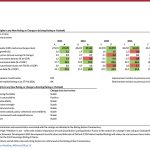
But despite a profit of €37.5 million between April and June this year, taken as a whole, the year so far has a loss of €70.7 million.
So why is TAP, at the very moment it needs positive results to ensure a good sale, still showing debts after a multi-million restructuring?
One of the reasons was an overall stagnation in passenger ticket sales. These fell in the first quarter of the year by 5.2%, grew 3.1% between April and June bringing in total ticket sales of €1.753Bn, down 0.5% on the like-for-like period, despite an increase of 2.,2% in passenger numbers.
Revenues generated for each mile flown per passenger fell slightly from 8.06 cents in the first half of 2024 to €7.86 cents this year – an indicator that reflects greater pressure on ticket prices in a strongly competitive environment.
The Engineering and Maintenance segment made a positive impact to TAP accounts in 2024, with a growth of €236 million, representing 5.6% of total operational income.
But in the first six months of the year, revenues in this segment fell 10.7%, to €104 million. TAP blames it on “constraints in the supply chain and lower internal availability”.
Although cargo and post & parcels did well (+7%) to €81.3 million, the airline’s operational income overall was down 1% in the first six months.
Operational costs grew 3.8% in the first six months to €1.964,2Bn, driven by an increase in personnel costs (+13-6%9, reflecting agreed salary increases. In 2Q this increase was 18.3%.
Operational costs from traffic, including the rental of aircraft from TAP and costs with irregularities, and repayments paid to customers for delays and cancelled flights increased 7% to €417.1 million in 1H, also driven by the Portugália strike in March and April.
In the statement of accounts, the CEO of TAP refers to “severe constraints on border control at national airports” that “significantly” impacted the airline’s activity. The carrier says that constraints on air traffic control in Europe, airport infrastructure limitations and adverse weather conditions have penalised punctuality.
On the positive side, the reduction in fuel costs for aircraft (-7.8%), maintenance costs (-10.8%) and materials consumed (-17.6%) also stand out.
Sources: Negócios/ECO