


Spain invests double the amount in its ports compared to Portugal
At the end of July, Portugal’s Minister of Infrastructures, Miguel Pinto Luz, presented the government’s strategy for its ports for 2025-2035.
The minister said the aim was to compete with Spain’s ports but admitted that Spain too was preparing to invest in increasing its cargo capacity, reduce CO2 emissions and increase digitalisation and security, improve accesses, particularly rail.
Portugal’s 10-year investment strategy for the next ten years foresees a total investment of €4Bn.
However, a similar investment project for ports in neighbouring Spain stands at just over €7Bn. In other words, Spain is to invest twice as much in its ports infrastructures compared to Portugal.
In 2026 alone, investment in Spain’s ports exceeded €1.6Bn according to Puertos del Estado, the public entity that manages Spain’s 46 ports.
Portugal has a network of over 40 ports, including five major ports—Aveiro, Douro and Leixões, Lisbon, Setúbal, and Sines—along with several smaller ports and ports in the Autonomous Regions of Madeira and Azores, which handle diverse cargo and contribute to the country’s maritime infrastructure and trade.
In 2024, Spain’s ports shipped 558 million tonnes of cargo, around six times more than Portugal which shipped 91 million tonnes.
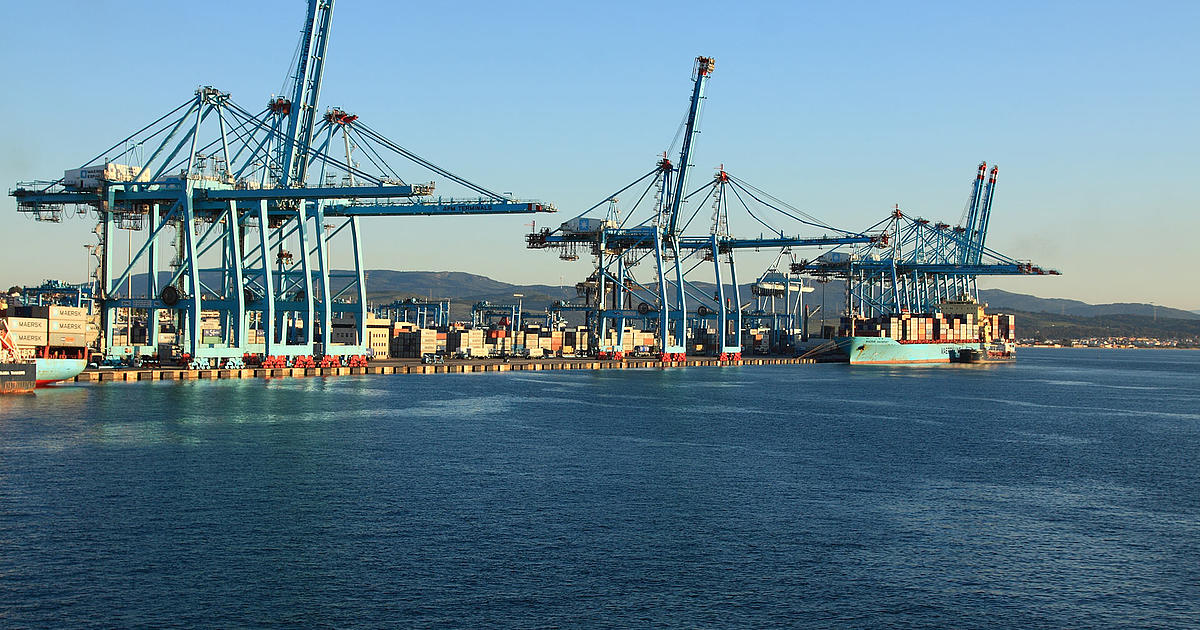
In terms of shipments, Spain’s Port of Algeciras dealt with 104 million tonnes – more than all of Portugal’s ports taken together.
With the goal of upping Portugal’s cargo shipments by 50% to 2025 to reach 125 million tonnes, Portugal’s strategic plan foresees an investment of €3Bn and 15 new concessions.
However, given that Spain is a much larger country, with more significant ports and a much heftier investment budget from its government, the Portuguese government’s plan to compete with Spain might be a tall order.
Source: Jornal de Negócios