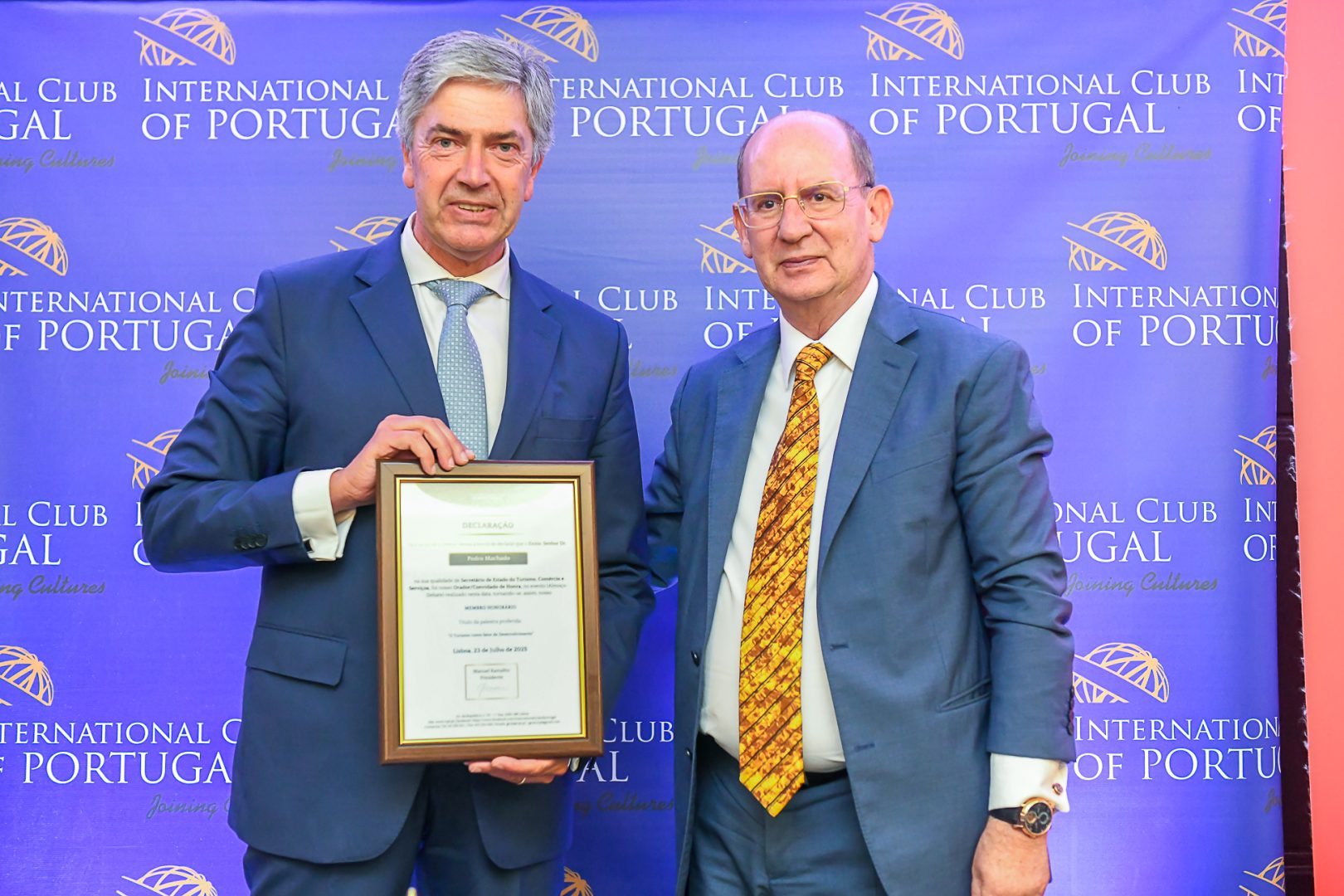



Portugal set to make €30Bn in tourism revenues this year forecasts Secretary of State for Tourism
Text: Chris Graeme; Photos: Fernando Bento (ICPT)
Tourism is one of the great drivers of the Portuguese economy, representing 11% of the country’s GDP, hosting 32 million tourists per year spending a collective €80 million on overnight stays in hotels, holiday lets, bed and breakfast accommodation and guest houses up and down the country, and bringing in revenues of almost €28Bn in revenues.
Yet Portugal does not rely overwhelmingly on tourism as a mono-export as many people overseas have thought for decades, being successful in a whole host of other sectors including manufacturing, agriculture, technology, renewable energy and foreign exports from its tens of thousands of mostly SMEs.
Nevertheless, tourism is one of the country’s strategic pillars of the economy, with a strategy defined by the current centre-right Democratic Alliance (AD) coalition government to 2035, and is one of the few sectors where political parties are generally on the same page when it comes to nurturing, developing, expanding and exploiting this money-making asset.
In fact, In 2024 Portugal’s tourism sector reached a record high in direct and non-direct economic benefits, contributing €60.6Bn to the national economy; the equivalent to 21.3% of GDP.
The industry also supported 1.2 million jobs, representing nearly 23% of total employment.
International visitor spending reached a record €31.8Bn, while domestic tourism contributed €22.2Bn depending on which sources are consulted.
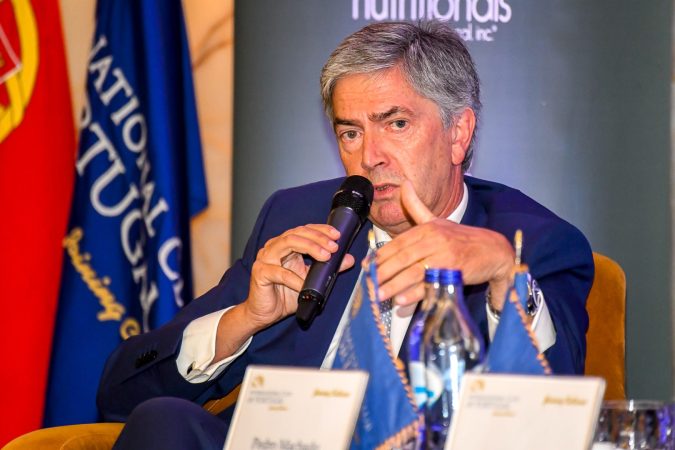
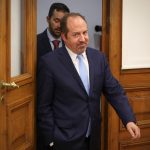
Which is why it was timely that the Secretary of State for Tourism, Trade and Services, Pedro Machado, was invited to address tourism business leaders, MPs and a smattering of municipal council bigwigs at a lunch organised by the International Club of Portugal (ICPT) on Wednesday, July 23 at Lisbon’s Sheraton Hotel & Spa in the last luncheon debate before the ‘silly season’ of the August holiday sets in.
What was interesting about this lunch was that at the table I was sat at, some of guests involved in tourism widely agreed that this summer was not looking as rosy as last, with hotel and restaurant bookings down, particularly in the Algarve.
Yet, according to the Secretary of State, and new data from the World Travel and Tourism Council (WTTC), indicators based on pre-bookings and reservations for flights and accommodation show that the sector looks set for a strong growth performance in 2025, building on a record-breaking performance in 2024.
In fact, tourism is forecast to generate €62.7Bn for Portugal’s economy this year according to the latest figures from Economic Impact Research (EIR) conducted jointly with Oxford Economics. This represents 21.5% of the country’s GDP, nearly 38% higher than pre-Covid record set in 2019, and far more generous than the 11% estimated by Pedro Machado.
Urban myths surrounding tourism
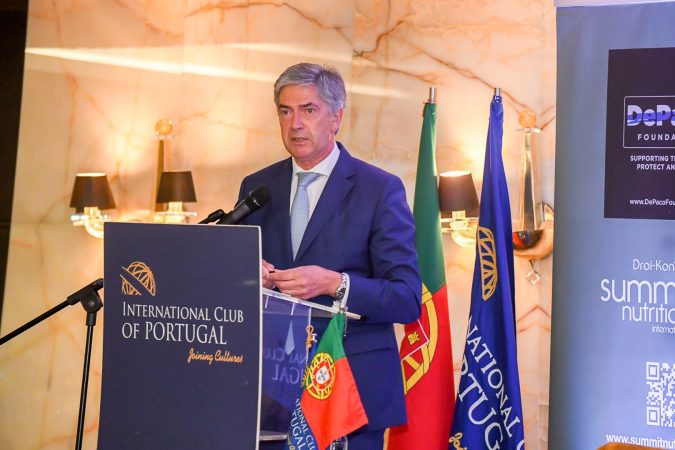
He said he would burst some urban legends about tourism. For example, it’s a relatively young industry for Portugal in terms of representing a strong structural aspect of the economy, having really only gained prominence since the 1970s and 1980s when it became to be seen as a factor for economic development and growth.
“All of the indicators that we have to date point to a substantial growth in 2025 using figures from 2019 as the benchmark in terms of revenues and overnight stays, with a 2-3% increase on 2024 in terms of tourist flows and +6% in revenues”, he said.
“If we maintain this upward curve in 2025, even given market oscillations, we’re taking about €30Bn in overall revenues,” he forecast.
However, by diversifying the market with products that Portugal’s tourism sector can offer (currently around 22), the market could grow even more.
Portugal’s tourism economy, he said, already had a direct impact on nearly 50 economic activities. However “we must counter the urban legend that Portugal is a mono-economy dependent on tourism, but it does have a transversal quality across all sectors of economic activity in both direct primary and indirect secondary sectors from wood, metals, glass, textiles, paper, ceramics, agricultural products, services, and most of all the hospitality and friendliness of the Portuguese people – the latter often not taken into account, but widely and keenly referenced by overseas visitors.
Too many tourists? No, bad management
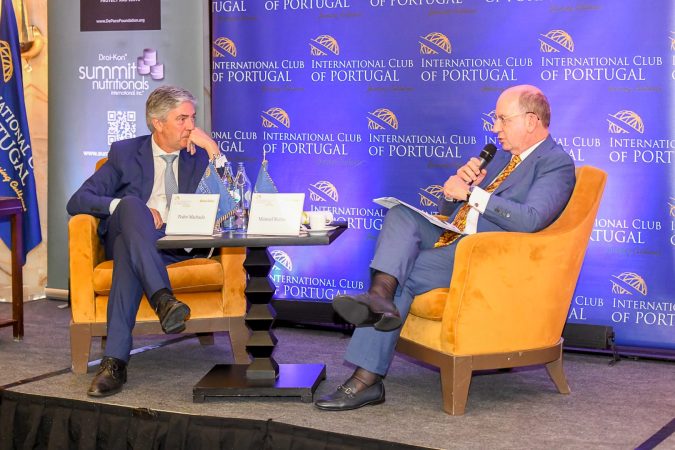
The second myth was that Portugal has “too many tourists”. “We don’t.” “We have some problems and all economic activities do. In the case of tourism we have a very special raw material – people.”
“Everybody we meet in our daily lives leaves a footprint, but saying that we’ve got too many tourists, and that they are responsible for the high prices of housing is an urban myth. In fact, in many cases tourism has been responsible for the renovation and refurbishment of buildings in cities where they were in a dilapidated and abandoned state,” he stressed.
And a case in point was Lisbon. Three decades ago, despite there being tourism, the increased force of tourism in the capital had helped regenerate the city and restored buildings, giving them a new lease of life.
“We have a problem of traffic which needs sorting, such as the lack of the management of tuk-tuk companies. For example, Sintra has a capacity for 107 tuk-tuks but actually has 600”, admitted Pedro Machado.
And the problem of the long queues of tourists waiting to visit the Jerónimos Monastery was a problem of management.
In 2019 there were 500 million people travelling, and by 2024 that figure of travellers stood at 1.3Bn and by 2030 the estimates point to 2.4 billion.
“We are aware that this flow of travellers is going to increase, and not just for the leisure period of the year but all-year-round.”
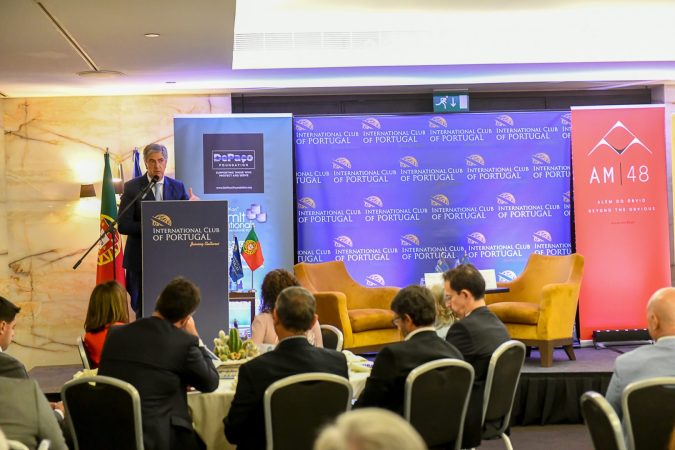
Treating overseas tourism workers well
And Pedro Machado also highlighted that the growth in tourism depended on human resources, stressing that immigration had an important role to play.
“We don’t have enough local capacity in terms of staff to meet this growth in the sector”, which this year should represent 16% of Portugal’s GDP.
He said that the €25-30Bn in revenues expected this year was the equivalent of almost one and a half times Portugal’s Recovery and Resilience Plan (RRP) – a package of EU funding to modernise and future proof Portugal ’s economy.
“If we can’t train, retain, motivate and integrate these human resources we can’t continue to grow our tourist economy”, he said.
To deal with the challenge, he said the government was “doing its homework” to create a “fast-track to immigration” and make it easier to bring in and integrate overseas workers.
“We got to treat our local and overseas tourism employees well,” emphasised the Secretary of State for Tourism.
Pedro Machado pointed out that 15% of the population in Portugal were immigrants (Over 1 million), but recalled that the country also had a strong tradition of emigration (over 20,000 in 2024 according to Macrotrends, bringing the total number of Portuguese emigrants living overseas to 1.8 million).
“Portugal is, moreover, a country of emigrants which is why we have to adopt a responsible attitude of respect and humanity for those coming here,” the government figure emphasised.
The Secretary of State for Tourism, Trade and Services also argued for “a fairer and more sensible” application of the tourist tax in Portugal, considering that its current disparity and municipal management do not always guarantee “added value and advantage” for the sector.
“Tourist taxes must have a rationale,” he said, warning of the situation of different municipalities applying rates ranging from “€1” to “€4”, some for “six months, others for nine months”, which, according to him, “shouldn’t be like that.”
Regarding the freedom of municipalities in defining these rates, the Secretary of State acknowledged that “the State should not interfere in the administrative and financial autonomy of municipalities, but it can, on the other hand, create regulations that can “justify and account for” the application of the tourist tax”.
In fact, a leading Lisbon tourism figure sat at my table said that there was no real control or checks over how these revenues from the tourism tax were spent by some municipalities.
On the other hand, Pedro Machado stressed that he does not agree that Portuguese people who work in Portugal, and who move from one place to another to work, should pay the tax.
Pedro Machado also informed that a new National Strategy for Tourism 2030 should be unveiled in September and that it would be based on a triangle of priorities: sustainable growth, improving the tourism experience, and visitor satisfaction.