


Oeiras mayor calls for greater State involvement in public housing
The Mayor of Oeiras – one of Portugal’s wealthiest municipalities – has called on the Portuguese government to get more involved in solving Portugal’s chronic affordable housing crisis and invest in more public housing.
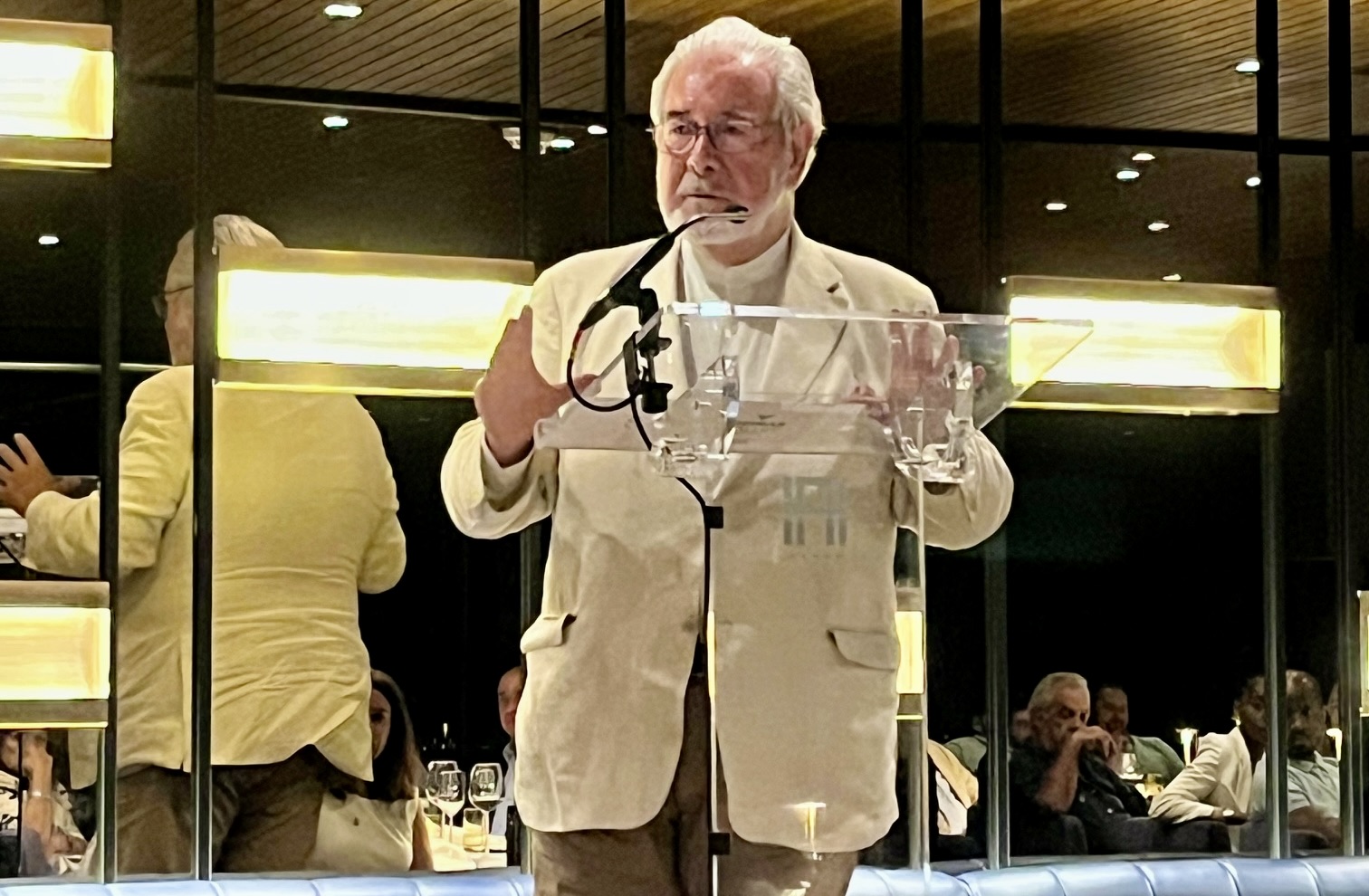
Isaltino Morais was one of the speakers at a dinner debate organised by the Technical Engineers Association (South Region Section) entitled ‘Housing: crisis, challenges, and solutions’.
Also involved in the debate were Carla Rocha and Nuno Neto, who head the council’s Social Housing Management department Municipal Housing Development and Conservation department, respectively.
At the opening of the debate, Engineer José Delgado, President of the Southern Regional Section of the OET, pointed out that “this initiative is part of the institution’s strategy to promote dialogue with political and technical decision-makers, addressing issues in which technical engineers play a key role”. He also stressed that “housing is one of those central themes, where technical engineers, both in municipalities and in companies, assume a decisive role”.
Engineer José Manuel Sousa, President of the OET, reiterated “the importance of close cooperation between technical and political decision-makers, arguing that holding regular discussions and knowledge share were essential to reaching decisions that, in the field, were up to technical engineers and engineers to execute”.
He also stressed that “technical engineers must actively get involved in defining public policies, contributing, with their technical knowledge, to more customised, efficient and effective solutions”.
Isaltino Morais argued that regular conversations between technicians and politicians were crucial to ensure quality and amendments to decisions taken.
He referred to the commitment of the municipality of Oeiras to solving housing problems, highlighting the financial effort made and the use of PRR (Recovery and Resilience Plan) funds to implement new housing projects.
Morais stressed that “Oeiras already has housing built using the PRR, thanks to the fact that the municipality has previously prepared projects that allowed it to submit applications immediately, thus positioning itself ahead of other municipalities”.
The mayor also stressed the the “housing market could not meet all the needs of the population, particularly those families who could not access the free market and agreed the the State should “ensure a more active role and that it was down to municipal councils to get directly involved to ensure a supply of affordable housing for rent.
He recalled the 1990s Special Rehousing Programme that eliminated tens of thousands of shanty town structures, but said that since then no Portuguese government had invested consistently in housing.
Isaltino Morais warned that house prices would likely continue to rise over the next five years and stressed that Portugal should ensure that about 10% of its housing stock is public – a figure significantly higher than the current 2%.
He also called for the need to change restrictions in the land law, introduced earlier, which suppressed the amount and price of urban building land, contributing to the escalation of prices of land for construction.
He considered that the recent legislative amendment that reserves new land for public housing was positive, but argued that private participation should also be allowed, provided that it is for cost-controlled projects.
The Mayor of Oeiras added that the debate around housing has been muddied and weaponised by extremist views both from the far-right and far-left parties for political reasons, while politicians had lacked the courage to reform the legislation and invest in public housing.
The mayor rounded off by saying that the various parties had to reach a long-term agreement to allow a public housing policy to be created to meet the country’s needs in a sustainable and stable way.